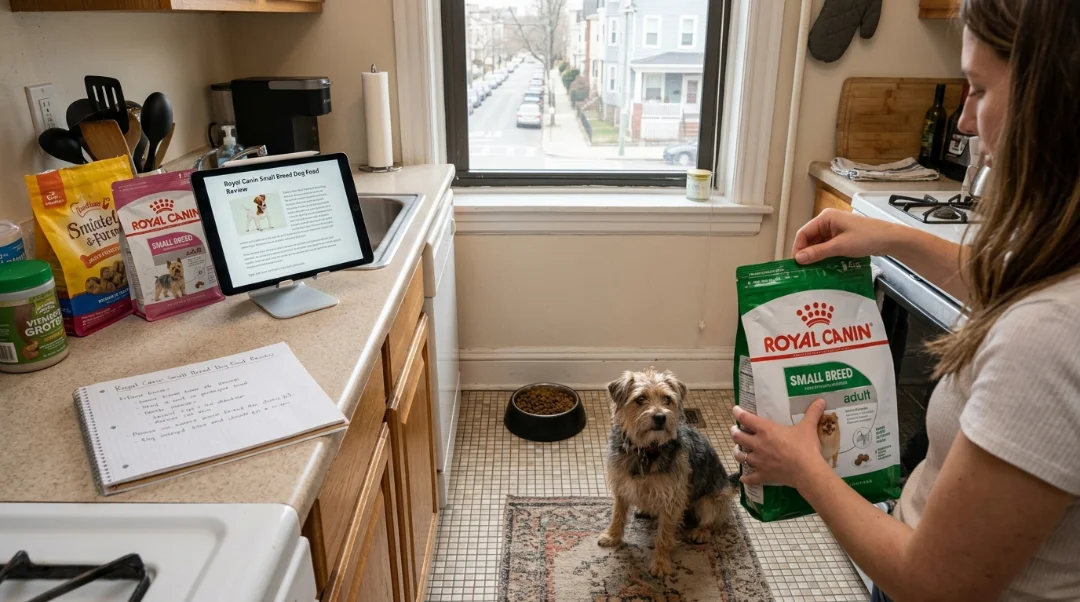
Royal Canin Small Breed Dog Food Review: Is It Worth the Price? 2026
Quick Summary
Our expert verdict at a glance
Royal Canin Small Breed is worth every penny for most owners — no other brand invests more in breed-specific precision engineering, and the palatability and consistency over decades of use speak for themselves.
Royal Canin is one of the most polarizing brands in the pet food world. Nutritionists and vets recommend it constantly. Some ingredient-focused pet owners hate it with a passion. The truth, as usual, is more nuanced — and understanding why Royal Canin divides opinion so sharply is key to knowing whether it’s the right food for your small dog.
Royal Canin: Brand Overview
Royal Canin was founded in France in 1968 by veterinarian Henri Lagarde, who began studying the relationship between diet and specific health conditions. The brand was acquired by Mars Petcare in 2001 and is now one of the largest pet food companies in the world.
The brand’s defining philosophy is precision nutrition: rather than making one “dog food” and marketing it broadly, Royal Canin engineers food for specific breeds, life stages, sizes, and health conditions. They produce over 200 different formulas worldwide.
For small breed owners specifically, the lineup includes formulas for dogs under 9 lbs (Mini), dogs under 22 lbs (Small), specific breed formulas (Chihuahua, Shih Tzu, Yorkshire Terrier, Pomeranian, and more), plus puppy, aging, and condition-specific lines within small breeds.
Manufacturing: Royal Canin operates its own manufacturing facilities in the US, France, and Brazil. US products are made in Lebanon, Missouri. They don’t use contract manufacturers — a plus for quality control.
Recall history: One recall in 2007 related to melamine contamination (a pet food industry-wide issue that year). No recalls since. A 17-year clean record is among the best in the industry.
Ingredient Analysis: Royal Canin Small Adult
Let’s look at the first five ingredients of Royal Canin Small Adult — the core formula for small breeds 9–22 lbs:
-
Chicken by-product meal — this is the most common point of criticism. By-product meal is chicken parts that aren’t muscle meat: liver, lungs, spleen, kidneys, and other organs. AAFCO regulates what can and can’t be included. These are highly digestible, nutrient-dense parts of the chicken — arguably more nutritious than pure muscle meat for protein and micronutrient content. The concern is quality consistency, which Royal Canin’s in-house manufacturing largely addresses.
-
Brewers rice — a rice processing by-product. High digestibility, moderate glycemic index. Not premium, but not harmful.
-
Brown rice — quality whole grain with fiber. Better impression than brewers rice.
-
Chicken fat — quality fat source, high in linoleic acid (omega-6). Preserved with mixed tocopherols (natural vitamin E).
-
Natural flavors — broadly permitted flavor enhancement, source not specified.
Guaranteed Analysis (as fed):
- Crude protein: 25%
- Crude fat: 15%
- Crude fiber: 5.5%
- Moisture: 10%
- Calories: 358 kcal/cup
Dry matter basis conversion:
- Protein: 27.8%
- Fat: 16.7%
These numbers are solidly appropriate for adult small breeds. The protein is adequate (not spectacular), the fat is in the right range, and the fiber is higher than average — supporting the digestive health claims.
What’s NOT in Royal Canin Small Adult:
- No artificial colors
- No artificial flavors (beyond “natural flavors”)
- No artificial preservatives (uses tocopherols and rosemary)
- No corn, wheat, or soy in most small breed formulas
AAFCO Statement and Feeding Trials
Royal Canin Small Adult carries the AAFCO statement: “formulated to meet the nutritional levels established by the AAFCO Dog Food Nutrient Profiles for maintenance.”
This is a formulation-based statement, not a feeding trial. Royal Canin does conduct feeding trials — but their published trial data is less extensive than Purina or Hill’s. The brand relies more on controlled nutrient formulation and palatability testing than on the formal feeding trial protocol that AAFCO also permits.
This isn’t a disqualifying factor, but it’s worth noting for comparison.
Royal Canin Small Breed Product Line Overview
Royal Canin Small Puppy
Target: Small breeds from weaning to 10 months Key specs: 31% protein, 20% fat, 371 kcal/cup Highlight: DHA from fish oil at 270 mg/100g as fed — one of the highest among mainstream puppy foods Price: ~$3.46/lb (13 lb bag)
Royal Canin Small Adult
Target: Small breeds 9–22 lbs, 10 months to 8 years Key specs: 25% protein, 15% fat, 358 kcal/cup Highlight: Crescent-shaped kibble engineered for small breed jaws, L-carnitine for fat metabolism Price: ~$2.10/lb (30 lb bag)
Royal Canin Aging 12+ Small Dog
Target: Small breeds 12 years and older Key specs: 25% protein, 11% fat, 328 kcal/cup Highlight: Softer kibble texture, reduced phosphorus, highly digestible proteins for aging digestive systems Price: ~$3.50/lb (14 lb bag)
Royal Canin Digestive Care Small Dog
Target: Small breeds with digestive sensitivity Key specs: 25% protein, 14% fat, 337 kcal/cup Highlight: Specific fiber blend (psyllium husk, beet pulp, FOS) for microbiome support and stool quality Price: ~$2.86/lb (14 lb bag)
Price Analysis: Is Royal Canin Worth It?
| Formula | Bag Size | Price | $/lb | Daily Cost (10 lb dog) |
|---|---|---|---|---|
| Small Adult | 30 lb | $62.99 | $2.10 | ~$0.35 |
| Small Puppy | 13 lb | $44.99 | $3.46 | ~$0.46 |
| Aging 12+ | 14 lb | $48.99 | $3.50 | ~$0.41 |
| Digestive Care | 14 lb | $39.99 | $2.86 | ~$0.38 |
For a 10-pound small dog eating Royal Canin Small Adult, the daily food cost is approximately $0.35. That’s less than a cup of coffee. The premium over budget brands is real but modest in absolute terms.
🐾 Pro Tip: Buy Royal Canin in the largest bag size you can use within 6 weeks. The 30 lb Small Adult bag brings the cost to $2.10/lb, versus the 2.5 lb bag at around $4/lb. Store in an airtight container in a cool, dry location.
Royal Canin vs. Competitors: Quick Comparison
| Brand | Protein | Fat | $/lb | Feeding Trial |
|---|---|---|---|---|
| Royal Canin Small Adult | 25% | 15% | $2.10 | Formulation |
| Purina Pro Plan Small | 30% | 20% | $2.94 | Yes |
| Hill’s Science Diet Small | 22.5% | 14.5% | $2.75 | Yes |
| Blue Buffalo Small | 26% | 15% | $3.20 | Formulation |
| Orijen Small Breed | 38% | 18% | $14+ | Formulation |
Royal Canin sits at a mid-range price with competitive nutrition. The key advantage over budget brands is consistency and precision. The key disadvantage versus Hill’s and Purina is the lack of formal feeding trial verification.
Pros and Cons of Royal Canin Small Breed
Pros:
- Most precise small breed engineering of any commercial brand
- Breed-specific formulas for 13+ small breeds (Chihuahua, Yorkie, Shih Tzu, etc.)
- 17-year recall-free track record in the US
- Exceptional palatability — picky dogs rarely refuse Royal Canin
- L-carnitine and targeted fiber in most formulas
- In-house manufacturing (no contract facilities)
- Excellent puppy and senior lineup for full life stage coverage
Cons:
- By-products in most formulas (legitimate but controversial)
- Formulation-only verification (not full feeding trials)
- More expensive than budget and mid-range brands
- Not available at all retailers (primarily pet specialty and vet offices)
- Ingredient list isn’t as “clean” looking as natural brands like Orijen or Wellness
Who Should Buy Royal Canin Small Breed
Royal Canin is the right choice if:
- You want breed-specific precision and have a Chihuahua, Yorkie, Shih Tzu, or Dachshund
- Your vet recommends it (they know your dog’s specific needs)
- Your small dog has been picky on other foods (palatability is Royal Canin’s strongest suit)
- You want a brand with a strong long-term consistency record
Consider an alternative if:
- You’re on a tight budget (Purina ONE or Diamond Naturals offers similar nutrition for less)
- You’re committed to by-product-free ingredient lists (Blue Buffalo or Orijen)
- You specifically want a feeding-trial verified formula (Hill’s or Purina Pro Plan)
See our full comparison of best dog food brands for small dogs for a side-by-side look at Royal Canin against its main competitors.
Frequently Asked Questions
Q: Is Royal Canin actually good for small dogs?
A: Yes — it’s one of the most consistently recommended small breed foods by veterinarians, and for good reason. The breed-specific engineering, strong palatability, and clean recall record make it a reliable choice. The ingredient list won’t win awards among “natural” food advocates, but the nutritional outcomes are consistently strong.
Q: Why do vets recommend Royal Canin so often?
A: Royal Canin has invested heavily in veterinary education and relationship-building with the veterinary community — historically there have been financial incentives in vet schools. But the food itself is also genuinely good. Most vets recommend it based on clinical experience with patient outcomes, not just familiarity.
Q: Is Royal Canin by-product meal a problem?
A: Not from a nutritional standpoint. AAFCO-regulated chicken by-product meal is a highly digestible, nutrient-dense protein source. The concern is consistency and quality control. Royal Canin’s in-house manufacturing is better quality controlled than many competitors. If you’re philosophically opposed to by-products, consider Blue Buffalo or Orijen instead.
Q: How does Royal Canin compare to Purina Pro Plan for small dogs?
A: Both are excellent. Purina Pro Plan has higher protein (30% vs. 25%), formal feeding trial verification, and similar pricing. Royal Canin has better breed-specific variety, marginally better palatability records for picky dogs, and a longer recall-free track record. Both are legitimate top choices — the decision often comes down to whether your dog’s breed has a Royal Canin-specific formula.
Q: Is Royal Canin worth the price compared to cheaper brands?
A: For most small dogs, yes. The additional cost is modest in daily terms ($0.35 vs. $0.25 for budget brands per day for a 10-pound dog), and the quality and consistency justifies it. If budget is genuinely constrained, Purina ONE Small & Toy Breed provides solid nutrition at a lower price point.
Bottom Line
Royal Canin Small Breed earns its place as one of the top-rated dog food brands for small breeds — not because of impressive ingredient marketing, but because of what actually matters: decades of consistent nutrition science, breed-specific precision no competitor matches, exceptional palatability, and a 17-year US recall-free record. The by-product and formulation-only criticisms are valid but not disqualifying. At $0.35/day for a 10-pound dog, the price is genuinely reasonable for what you’re getting.
Tagged in:
Get Weekly Small Dog Food Tips
Curated reviews, exclusive deals from Chewy, and breed-specific nutrition advice — delivered every Tuesday. Join 12,000+ small dog parents.
🔒 No spam, ever. Unsubscribe anytime with one click.