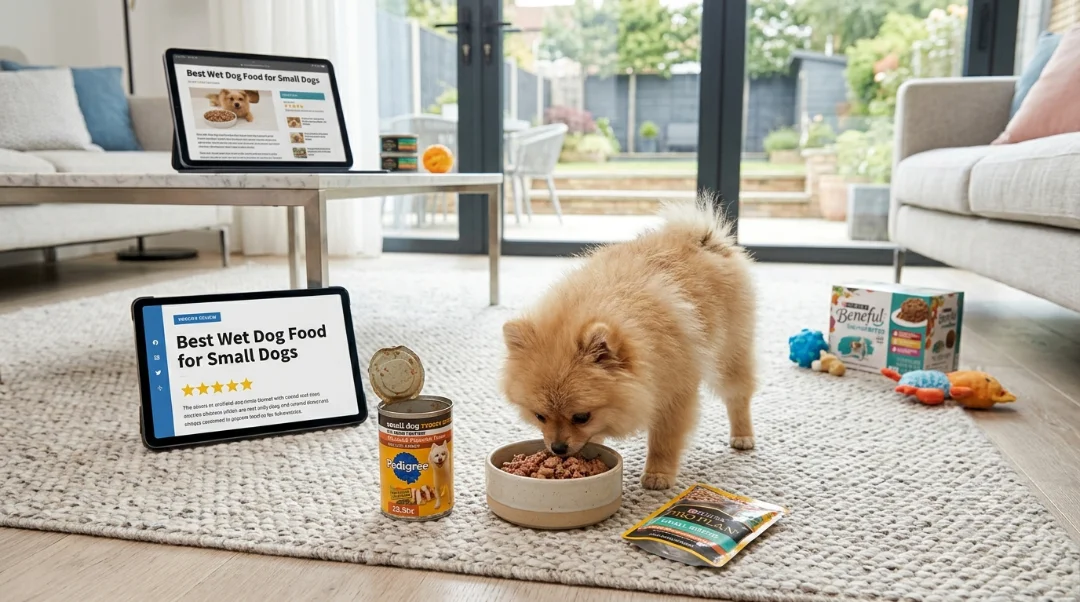
Best Wet Dog Food for Small Dogs: Top Canned & Pouched Picks
Quick Summary
Our expert verdict at a glance
Royal Canin Loaf in Sauce is our top wet food pick for small dogs — the texture, palatability, and formulation are hard to beat.
Wet food gets overlooked in many “best dog food” discussions, but for small breeds it deserves serious consideration. The higher moisture content (typically 75–82% vs. 8–12% in dry kibble) supports kidney function and helps small dogs stay hydrated — especially important for breeds that are prone to urinary issues. Plus, the aroma and palatability of wet food is almost universally preferred by dogs, making it a powerful tool for picky eaters.
Wet Food vs. Dry Food for Small Dogs
Neither wet nor dry food is universally superior. Each has genuine advantages:
Wet food advantages:
- Higher moisture content supports hydration and kidney health
- More palatable — ideal for picky eaters and dogs recovering from illness
- Easier to chew — excellent for dogs with dental problems or missing teeth
- Often higher in protein relative to carbohydrates
- Comes pre-portioned in cans or pouches (no measuring)
Dry food advantages:
- More cost-effective per calorie
- Can be left out longer without spoiling
- Some kibble shapes help clean teeth (though this benefit is often overstated)
- Easier to use in puzzle feeders and slow feeders
- Longer shelf life once opened (dry, sealed bag vs. opened wet can)
The hybrid approach — feeding a combination of wet and dry food — is popular and well-supported. Many small dog owners use dry kibble as the base and add a tablespoon or two of wet food as a topper. This delivers the palatability of wet food with the cost efficiency of dry.
What to Look For in Wet Dog Food for Small Dogs
Protein as the first ingredient. Whether it’s chicken, beef, turkey, or salmon, a named protein should lead the ingredient list. Avoid foods where water, broth, or starchy vegetables dominate the first few spots.
Appropriate portion sizes. Standard 3.5 oz. or 5.5 oz. cans are practical for small dogs. Pouches often come in 3 oz. sizes — convenient for single servings.
Avoid unnecessary thickeners. Carrageenan is a common thickener in wet pet food that some owners prefer to avoid. Guar gum and xanthan gum in small amounts are generally considered fine.
AAFCO complete and balanced. Wet food that’s labeled as “complete and balanced” can be fed as a sole diet. “Complementary” or “topper” products should only be used alongside a complete food.
No added salt or onion/garlic. Some wet foods marketed to humans or cats contain onion or garlic powder (toxic to dogs) or very high sodium. Always check the ingredient list.
Our Top Wet Food Picks for Small Dogs
1. Royal Canin Size Health Nutrition Small Adult Loaf in Sauce — Best Overall
Royal Canin’s loaf-in-sauce format is a consistent winner. The smooth loaf texture is easy for small mouths to manage, and the sauce adds moisture and aroma that makes even the pickiest small dogs interested. The nutritional profile is excellent — formulated specifically for small breed adults under 22 lbs, with the calorie density appropriate for small bodies.
One practical advantage: the 3.5 oz. tray format means each serving is already portioned correctly for most small dogs. No leftover half-cans to refrigerate.
Best for: Adult small dogs, picky eaters, everyday feeding
2. Merrick Lil’ Plates Grain-Free Small Dog Stew — Best Grain-Free Wet Food
Merrick’s Lil’ Plates stews are genuinely high quality. The “real cuts” format contains visible pieces of chicken or beef in a thick, savory stew — which dogs find irresistible. The grain-free formulation uses peas and potatoes as carbohydrate sources. As with all grain-free diets, discuss with your vet if your dog has any heart health concerns.
The variety packs are convenient for multi-flavor feeding, helping prevent the “boredom” that sometimes leads small dogs to refuse a single repeated flavor.
Best for: Grain-sensitive dogs (vet-confirmed), texture-preferring dogs, topper use
3. Hill’s Science Diet Adult Small & Toy Breed Wet Food — Best Vet-Recommended Wet
Hill’s Science Diet wet food uses the same research-backed formulations as their dry kibble. The small breed wet formula includes omega-6 fatty acids for skin and coat health, high-quality chicken, and is designed to be easy to digest. It’s one of the few wet foods that vets recommend routinely for general maintenance (not just therapeutic use).
Best for: Dogs already on Hill’s dry food, dogs with sensitive stomachs, vet-recommended diets
4. Purina Pro Plan Small & Toy Breed Wet Entrée — Best Value
Purina Pro Plan delivers premium nutrition at a more accessible price than Royal Canin or Hill’s. The wet food formula includes real chicken as the first ingredient, live probiotics for digestive health (yes, even in wet food), and high-quality protein. Purina’s manufacturing consistency is among the best in the industry, and the brand has an extensive track record in feeding trials.
Best for: Everyday main meal feeding, budget-conscious owners who want quality
How Much Wet Food Should I Feed My Small Dog?
A general starting guideline for adult small dogs:
| Dog Weight | Daily Wet Food Amount |
|---|---|
| 3–5 lbs | 1 – 1.5 small cans (3–4.5 oz) |
| 6–10 lbs | 1.5 – 2 cans (4.5–7 oz) |
| 11–15 lbs | 2 – 2.5 cans (6–8.5 oz) |
| 16–22 lbs | 2.5 – 3 cans (8.5–10 oz) |
These are rough guides — always follow the feeding instructions on the specific product and adjust based on your dog’s activity level and body condition. If you’re mixing wet and dry food, reduce portions of each proportionally.
Storing Leftover Wet Food
Opened cans or pouches should be:
- Covered and refrigerated immediately
- Used within 3–5 days
- Brought back to room temperature (or briefly warmed) before serving — cold food straight from the fridge is less appealing and can cause stomach upset in some dogs
Never leave wet food out in your dog’s bowl for more than 2 hours at room temperature, especially in warm weather, as it spoils quickly.
FAQ
Q: Is it OK to feed my small dog wet food every day?
Yes, if it’s a “complete and balanced” wet food (not a topper or supplement). Many dogs thrive on an all-wet diet. The main considerations are cost (wet food is more expensive per calorie than dry) and the fact that wet food doesn’t provide any dental abrasion benefit. Consider regular tooth brushing or dental chews if feeding wet food exclusively.
Q: My senior dog refuses to eat dry food. Can I switch to all wet?
Absolutely. Senior small dogs often develop dental problems or pain that makes chewing kibble difficult, and wet food is an excellent solution. If your senior dog has recently stopped eating dry food, a vet check is worthwhile to rule out dental disease or other health issues before assuming it’s just preference.
Q: Can I mix different brands of wet food?
Yes, mixing brands is safe as long as both are AAFCO-complete and appropriate for your dog’s life stage. Some owners rotate proteins (chicken one week, beef the next) to provide dietary variety and reduce the risk of developing food sensitivities.
Tagged in:
Get Weekly Small Dog Food Tips
Curated reviews, exclusive deals from Chewy, and breed-specific nutrition advice — delivered every Tuesday. Join 12,000+ small dog parents.
🔒 No spam, ever. Unsubscribe anytime with one click.