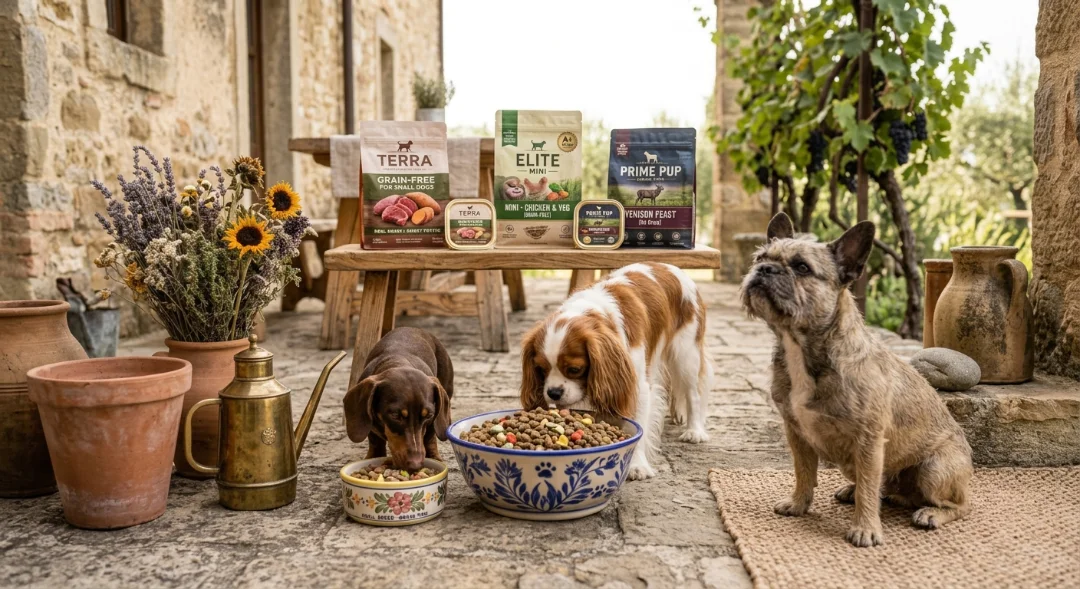
Best Grain-Free Dog Food for Small Breeds: Safety, Benefits & Top Picks 2026
Quick Summary
Our expert verdict at a glance
Merrick Grain Free Small Breed is our top grain-free pick for small dogs with confirmed grain sensitivities, but grain-inclusive diets remain the safer default for most small breeds given current FDA research.
Grain-free dog food became one of the biggest trends in pet nutrition over the past decade. For small breed owners, the appeal made sense — wolves don’t eat wheat, marketing promised cleaner ingredients, and many dogs with allergies seemed to improve. But the picture got more complicated in 2018 when the FDA started investigating a potential link between grain-free diets and heart disease.
Here’s what you need to know to make a genuinely informed decision about grain-free dog food for small breeds in 2026.
The FDA DCM Investigation: What the Current Evidence Says
In July 2018, the FDA announced it was investigating reports of dilated cardiomyopathy (DCM) — a life-threatening heart condition — in dogs eating grain-free diets. The concern centered specifically on diets high in peas, lentils, and legumes as primary carbohydrate sources (substituting for grains).
What the research has found so far:
- Dogs diagnosed with DCM were disproportionately eating grain-free diets heavy in peas and lentils
- Some dogs showed improvement when switched to grain-inclusive diets, which is significant
- The FDA published case reports but has not made a definitive causal finding
- As of 2024, the investigation is still officially open, though the FDA has not issued a recall or ban
The leading hypothesis: Large amounts of dietary peas and legumes may inhibit taurine absorption or disrupt taurine synthesis. Taurine deficiency is a known cause of DCM in dogs.
What this means for small breed owners:
- Small breeds are less commonly reported in DCM cases (Golden Retrievers and large/giant breeds appear most often in reports)
- However, the precautionary principle applies: unless your small dog has a confirmed grain sensitivity, grain-inclusive food is the safer default
- If you feed grain-free, choose formulas that aren’t pea-heavy and consider periodic cardiac monitoring if you have a breed with any heart disease predisposition
🐾 Pro Tip: If your small dog is currently eating a grain-free diet and doing well, don’t panic-switch. Talk to your vet, consider an echocardiogram if your dog is over 5 years old, and make any dietary changes gradually. Abrupt food changes cause their own problems.
Who Should Actually Feed Grain-Free to Small Dogs
Grain-free is appropriate (and sometimes necessary) in specific circumstances:
Confirmed grain allergy: True grain allergies in dogs exist but are less common than marketing suggests. They’re diagnosed through a proper elimination diet (8–12 weeks on a novel protein and carbohydrate with strict no-treat protocols), not by switching food and noticing improvement.
Confirmed grain intolerance: Some dogs without a true allergy still experience digestive upset from specific grains (particularly wheat or corn). An elimination trial can confirm this.
Specific celiac-type conditions: Rare in dogs, but some Irish Setters have a documented genetic sensitivity to gluten. Breed-specific research applies here.
What doesn’t justify grain-free:
- Your dog has a vague “sensitivity” without confirmed testing
- You prefer the ingredient list aesthetically
- Your dog’s coat improved after switching (coat improvement often correlates with a protein change, not grain removal)
Grain-Free vs. Potato-Free: Understanding the Difference
A subset of grain-free formulas have moved away from both grains AND legumes/potatoes to address DCM concerns. These are sometimes called “ancestral” or “biologically appropriate” formulas.
Orijen and some Zignature formulas use lower-glycemic vegetables (squash, lentils in small amounts) alongside high meat content. These formulas have different risk profiles than grain-free foods where peas are the second or third ingredient.
If you’re committed to grain-free, look for:
- Peas, lentils, and chickpeas low in the ingredient list (not in the top five)
- Very high meat content (70%+)
- Diverse protein sources
- Taurine explicitly added to the formula
Top 4 Best Grain-Free Dog Foods for Small Breeds
1. Merrick Grain Free Small Breed Adult — Best Overall
Merrick Grain Free Small Breed uses deboned chicken or beef as the first ingredient, with sweet potatoes and peas supporting the carbohydrate profile. Protein hits 30%, fat 17%, at 354 kcal/cup.
The key differentiator from many grain-free formulas is that peas appear lower in the ingredient list (fifth and sixth) rather than second and third. This reduces the legume-heavy concern that characterizes riskier grain-free formulas.
Kibble size is appropriate for small breeds at 7mm, and the formula is available in multiple protein rotations. At around $4.42/lb, it’s premium priced but genuinely high-quality.
2. Taste of the Wild Pacific Stream Small Breed — Best Novel Protein Grain-Free
Taste of the Wild Pacific Stream features smoked salmon as the primary protein — a true novel protein for most dogs who’ve been on chicken or beef their whole lives. This makes it excellent for dogs beginning an elimination diet trial for suspected allergies.
Protein is 28%, fat 17%, at 370 kcal/cup. The formula uses sweet potatoes and peas, with peas appearing later in the ingredient list. The smoked salmon provides natural omega-3 fatty acids, and the formula has excellent palatability — most small dogs who’ve been resistant to other foods eat this willingly.
3. Canidae Pure Small Breed Adult — Best Limited Ingredient Grain-Free
Canidae Pure Small Breed is a limited ingredient diet (LID) with just 10 key ingredients — designed for dogs with multiple sensitivities. Available in salmon + sweet potato or lamb + pea varieties.
The simplicity is the point: fewer ingredients mean fewer potential triggers. Protein is 28%, fat 13%, at 370 kcal/cup. The ingredient list is one of the cleanest of any grain-free small breed formula, making it useful both for allergy management and for owners who simply want to know exactly what their dog is eating.
See our guide to dog food for small dogs with allergies for how Canidae Pure fits into an elimination diet protocol.
4. Zignature Small Bites Grain Free — Best for Novel Protein Variety
Zignature is notable for its extensive lineup of truly novel proteins — kangaroo, catfish, guinea fowl, pork, trout. For small dogs who’ve developed sensitivity to common proteins (chicken, beef, salmon), Zignature provides options that few other brands match.
Their Small Bites version uses 6mm kibble sized for small breed jaws. Protein runs 28–32% depending on the protein variety, and all formulas are potato-free as well as grain-free — addressing the legume-heavy concern by using alternative carbohydrates.
At around $3.70/lb, pricing is fair for the novelty and quality of the protein sources.
Transitioning a Small Dog From Grain-Inclusive to Grain-Free
The 10-day rule applies here just as with any food change, but grain-free transitions sometimes cause temporary loose stools because the carbohydrate sources (peas, sweet potatoes) are digested differently than grains. This typically resolves in 5–7 days.
If loose stools persist beyond 10 days after a full transition, the food may not be a good match for your dog’s digestive system — not every dog does better on grain-free.
For dogs with sensitive stomachs considering grain-free, see our best dog food for small dogs with sensitive stomach guide before making the switch.
Frequently Asked Questions
Q: Is grain-free dog food safe for small dogs in 2026?
A: The FDA investigation into grain-free diets and DCM is still open, but no conclusive causal link has been proven. The concern appears most significant for large breeds and dogs eating diets where peas and lentils are primary carbohydrate sources. For small breeds without heart disease history, the risk is lower but not zero. Grain-inclusive remains the safer default unless your dog has confirmed grain sensitivity.
Q: What grains should small dogs avoid?
A: Most dogs tolerate all grains fine. If a small dog has confirmed grain sensitivity, the most common culprits are wheat and corn. Rice, oats, and barley are generally well-tolerated and are considered quality grain sources. “Grain-free” as a concept doesn’t mean “any grain” — the specific grain matters.
Q: Does grain-free food cause DCM in small dogs?
A: The FDA’s DCM reports have predominantly involved large breeds. Small breed-specific DCM cases linked to grain-free diets are less frequently reported. That said, the mechanism (potential taurine disruption from high legume diets) could theoretically apply to any dog. Breeds predisposed to heart disease (Cavalier King Charles Spaniels, for example) should probably stay grain-inclusive.
Q: How do I know if my small dog has a grain allergy?
A: Through an elimination diet — the only reliable method. This involves feeding a single novel protein and carbohydrate for 8–12 weeks with absolutely no other food sources. If symptoms (skin, digestive, ear infections) resolve, you reintroduce grains one at a time to identify the trigger. Your vet can guide this process. Over-the-counter allergy tests (blood tests, saliva tests) are not reliable for food allergies.
Q: Are there grain-free small breed puppy foods?
A: Yes, but veterinary nutritionists generally recommend grain-inclusive puppy food during the critical development period, given the DCM uncertainty. Once your puppy reaches adulthood at 10–12 months and if confirmed grain sensitivity is a factor, transitioning to grain-free is a reasonable adult decision.
Bottom Line
The best grain-free dog food for small breeds is Merrick Grain Free Small Breed for most dogs with confirmed grain sensitivity — it balances quality ingredients, appropriate legume levels, and small breed sizing. For novel protein needs, Zignature Small Bites offers the widest variety. However, the most important message from 2026 research is this: grain-free should be a medical decision based on confirmed sensitivity, not a marketing preference. For most healthy small dogs, grain-inclusive food remains the evidence-based first choice.
Tagged in:
Get Weekly Small Dog Food Tips
Curated reviews, exclusive deals from Chewy, and breed-specific nutrition advice — delivered every Tuesday. Join 12,000+ small dog parents.
🔒 No spam, ever. Unsubscribe anytime with one click.