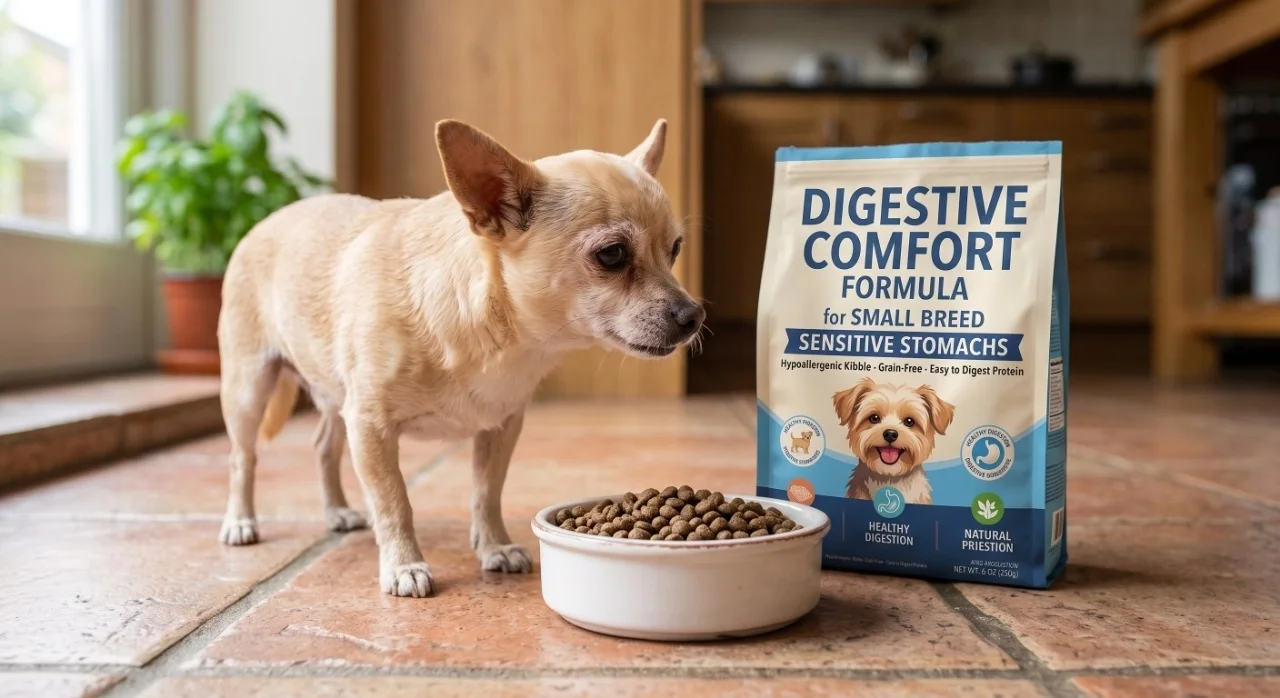
Best Dog Food for Small Dogs with Sensitive Stomach: 7 Gentle Options 2026
Quick Summary
Our expert verdict at a glance
Hill's Science Diet Sensitive Stomach & Skin Small Breed is the most reliable starting point for small dogs with digestive issues — vet-tested, moderate fat, and backed by feeding trials.
A small dog with a sensitive stomach is more common than you’d think. The problem is real — constant loose stools, random vomiting, excessive gas, or audible stomach gurgling after meals — and it’s genuinely miserable for both the dog and the owner managing cleanup. Finding the best dog food for small dogs with sensitive stomach starts with understanding what’s actually causing the sensitivity.
Signs of a Sensitive Stomach in Small Dogs
Not every digestive incident signals a sensitive stomach. Dogs occasionally eat grass, get into the trash, or drink from puddles — one-off events don’t count. A sensitive stomach is a consistent pattern:
- Loose stools on most days (not formed, not necessarily watery — anywhere in between)
- Vomiting 2+ times per week without obvious cause
- Excessive gas or stomach gurgling after regular meals
- Inconsistent appetite (eating well some days, refusing on others)
- Occasional blood-streaked mucus in stool (always warrants a vet check)
Any of these symptoms consistently for more than 2 weeks is worth addressing with both diet and a vet visit.
Common Triggers for Sensitive Stomach in Small Dogs
High fat content: Small breeds frequently react to high-fat diets with loose stools, vomiting, or at worst, pancreatitis. Diets over 18% fat are risky for fat-sensitive small dogs. Even a single fatty treat can trigger an episode.
Chicken allergy/intolerance: Chicken is the most common dietary protein in commercial dog food and the most common food allergen in dogs. If your dog eats chicken in every food they’ve ever had, a chicken sensitivity may never have been identified. Switching to salmon or turkey as the primary protein is often the single most effective dietary change for sensitive small dogs.
Rapid food transitions: Dogs need 10 days to adjust to new food. Most owners take 3–5 days at best, which is why post-switch stomach upset is so common. This isn’t a food reaction — it’s a transition reaction.
Grain content (for some dogs): Most dogs handle grains fine. A small subset has genuine grain sensitivity, identifiable through elimination diet testing.
Cheap filler ingredients: Generic “meat and bone meal,” animal digest, corn syrup, and artificial preservatives are harder to digest than quality named protein sources. Some small dogs react to these with inconsistent stools.
Kibble that’s too fat-forward: Even high-quality foods can be inappropriate if the fat percentage is too high for a particular dog.
🐾 Pro Tip: Before spending money on specialty sensitive stomach food, rule out non-dietary causes. Parasites (Giardia is very common in dogs), bacterial infections, IBD, and exocrine pancreatic insufficiency all cause similar symptoms and require veterinary treatment rather than a food switch. A fecal test at your vet is a low-cost first step.
The 10-Day Transition Rule: Why It Matters
If you take nothing else from this guide, take this: the most common cause of digestive upset after switching to a new food — including a sensitive stomach formula — is switching too fast.
Proper 10-day transition protocol:
- Days 1–3: 75% old food, 25% new food
- Days 4–6: 50% old food, 50% new food
- Days 7–9: 25% old food, 75% new food
- Day 10+: 100% new food
For dogs with confirmed sensitive stomachs, extend this to 14 days. Stay at each stage until stools are firm before moving forward.
Top 7 Best Dog Foods for Small Dogs with Sensitive Stomach
1. Hill’s Science Diet Sensitive Stomach & Skin Small Breed — Best Overall
Hill’s Sensitive Stomach & Skin Small Breed is the most evidence-backed option on this list — it’s one of the few sensitive stomach formulas validated through feeding trials rather than just formulation. The prebiotic fiber blend specifically supports a healthy intestinal microbiome.
Chicken is the first ingredient with 22.5% protein, 12.5% fat (one of the lowest on the list — important for fat-sensitive dogs). The formula includes vitamin E and omega-6 for skin health, since sensitive stomach and sensitive skin often appear together in small breeds.
At around $3.22/lb, it’s fairly priced for what you get.
2. Royal Canin Digestive Care Small Dog — Best for Microbiome Support
Royal Canin Digestive Care is specifically designed to support the gut microbiome and improve stool consistency. The formula uses highly digestible proteins and a specific fiber combination (psyllium husk, fructooligosaccharides) that feeds beneficial gut bacteria while improving stool formation.
25% protein, 14% fat, 337 kcal/cup. The specifically low calorie density is a bonus for small dogs prone to overfeeding. This is the pick when loose stools and inconsistent stool quality are the primary symptoms.
3. Purina Pro Plan Sensitive Skin & Stomach Small Breed — Best Salmon-Based Option
Purina Pro Plan’s sensitive formula uses salmon as the primary protein rather than chicken — a meaningful change for dogs with chicken sensitivity. Salmon provides both high-quality protein and natural omega-3 fatty acids for skin and digestive health.
26% protein, 13% fat, 374 kcal/cup. The oat-based carbohydrates are among the most digestible grain sources available. Probiotic bacteria (Lactobacillus acidophilus) are included for microbiome support. This is the best-value sensitive formula for dogs who may have chicken sensitivity.
4. Blue Buffalo Basics Small Breed Turkey & Potato — Best Limited Ingredient
Blue Buffalo Basics is a limited ingredient diet using turkey meal as the single animal protein and potato as the primary carbohydrate. With only 10 key ingredients, it makes it easy to identify and eliminate potential triggers.
24% protein, 13% fat, 339 kcal/cup. Includes pumpkin as a natural fiber source — anecdotally one of the most effective natural digestive aids for dogs. No chicken, no beef, no grains, no dairy — eliminating the most common triggers in one formula.
5. Natural Balance LID Small Breed Salmon & Sweet Potato — Best for Elimination Diets
If you suspect a specific protein allergy and want to run a proper elimination diet, Natural Balance LID Small Breed is a clean, reliable formula with a single protein source. The salmon + sweet potato combination uses ingredients that most dogs have never eaten, making it effective for identifying triggers.
28% protein, 10% fat (the lowest fat content on the list), 328 kcal/cup. The very low fat is specifically chosen for dogs with fat sensitivity.
6. Wellness Simple Limited Ingredient Small Breed — Best Natural Limited Ingredient
Wellness Simple uses a single animal protein (turkey or salmon, depending on variety) with digestible carbohydrates. The formula includes prebiotic fiber and probiotics for comprehensive digestive support.
27% protein, 12% fat, 361 kcal/cup. No artificial additives, no fillers, clean and simple. Probiotics (Lactobacillus plantarum) are added after cooking to ensure live cultures reach the GI tract.
7. Royal Canin Gastrointestinal Small Dog (Prescription) — For Serious Cases
For small dogs with chronic, severe GI issues that don’t respond to over-the-counter sensitive stomach formulas, Royal Canin Gastrointestinal Small Dog (prescription diet, vet authorization required) is the clinical solution. It uses hydrolyzed protein and highly digestible ingredients formulated specifically for dogs with diagnosed GI disorders.
This requires a vet visit and prescription — but for dogs with IBD, EPI, or chronic enteritis, it’s often the only thing that actually works.
Adding Probiotics and Digestive Aids
Food isn’t the only tool for sensitive stomach management:
Canned pumpkin (plain, not pie filling): 1–2 teaspoons per meal adds soluble fiber that firms loose stools and soothes GI inflammation. One of the safest and most effective natural digestive aids.
Probiotic supplements: FortiFlora (Purina), Proviable (Nutramax), or Visbiome Vet are vet-recommended probiotic products that can be added to any food during transitions or flare-ups.
Digestive enzymes: Products containing protease, lipase, and amylase help dogs with poor digestive efficiency break down food more completely.
For small dogs with documented allergies alongside sensitive stomachs, see our best dog food for small dogs with allergies guide for targeted recommendations.
Frequently Asked Questions
Q: What is the best food for a small dog with an upset stomach?
A: For an acute upset stomach (vomiting, loose stools from a one-off cause), bland diet works best: plain cooked white rice and boiled chicken breast, 50/50, for 2–3 days. Then slowly reintroduce regular food. For chronic sensitive stomach issues, Hill’s Science Diet Sensitive Stomach & Skin Small Breed or Purina Pro Plan Sensitive Skin & Stomach are the starting points.
Q: Can grain-free food help a small dog with sensitive stomach?
A: For some dogs, yes — if grains are a specific trigger. But grain sensitivity is less common than other triggers (fat content, chicken sensitivity, rapid food transitions). An elimination diet is the proper way to identify if grains are the issue. Don’t automatically assume grain-free will help — it may not, and introduces other considerations.
Q: How long does it take for a new food to help a small dog’s sensitive stomach?
A: Allow 4–6 weeks minimum to evaluate a new food’s effect on digestion. In the first 2 weeks, you may see transition-related symptoms (temporary loose stools) even if the food is ultimately a good fit. True improvement usually shows by 3–4 weeks in.
Q: What causes sudden stomach sensitivity in a small dog that was previously fine?
A: Common triggers for sudden onset include: a formula change by the manufacturer (common but not always announced), a bad batch of food (check recall databases), a new treat introduced to the diet, stress (moving, new pet, schedule change), or a health issue (pancreatitis, IBD, Giardia). Any sudden onset of persistent digestive symptoms warrants a vet visit.
Q: Should I feed wet or dry food to a small dog with a sensitive stomach?
A: Either can work. Wet food is easier to digest for dogs with very sensitive GI tracts, but it doesn’t provide the dental benefit of dry kibble. Many owners feed primarily dry with a small wet food topper. The specific food choice (protein source, fat content) matters more than wet vs. dry for most sensitive stomach cases.
Bottom Line
The best dog food for small dogs with sensitive stomach addresses the specific trigger affecting your individual dog. For most cases, Hill’s Science Diet Sensitive Stomach & Skin Small Breed is the safest starting point — moderate fat, high digestibility, and backed by feeding trials. If chicken sensitivity is suspected, Purina Pro Plan Sensitive with salmon or Blue Buffalo Basics with turkey provides a different protein source at a similar quality level. And remember: no food will help if the transition is rushed — the 10-day rule isn’t optional for sensitive dogs.
Tagged in:
Get Weekly Small Dog Food Tips
Curated reviews, exclusive deals from Chewy, and breed-specific nutrition advice — delivered every Tuesday. Join 12,000+ small dog parents.
🔒 No spam, ever. Unsubscribe anytime with one click.