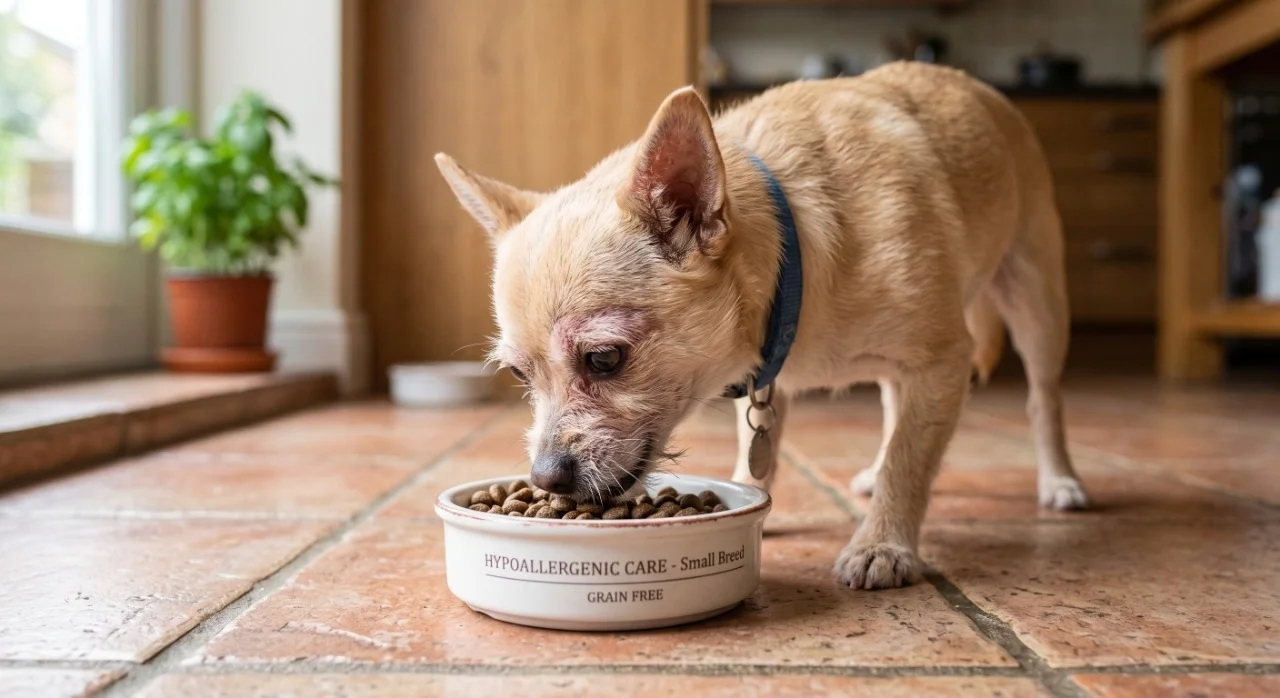
Best Dog Food for Small Dogs with Allergies: LID & Hypoallergenic Options 2026
Quick Summary
Our expert verdict at a glance
Royal Canin Hydrolyzed Protein Small Dog is the gold standard for confirmed food allergy management in small breeds — no other commercial food offers the same allergy safety guarantee.
Food allergies in small dogs are genuinely common — but they’re also genuinely over-diagnosed. If your dog has chronic skin issues, ear infections, or digestive problems, it’s easy to assume food is the culprit and spend hundreds of dollars on specialty food before discovering the real cause is environmental allergies, parasites, or something else entirely.
This guide cuts through the confusion to help you properly identify whether your small dog has food allergies, and if so, what to do about it.
Food Allergy vs. Environmental Allergy: The Critical Distinction
This is the most important thing to understand before spending money on specialty food:
Food allergies cause symptoms from ingesting a specific protein or ingredient. Symptoms: skin itching (often face, paws, belly, and groin), ear infections, GI symptoms (loose stools, vomiting). Symptoms are typically year-round.
Environmental allergies (atopy) cause symptoms from airborne or contact allergens — pollen, dust mites, mold, grass. Symptoms are often (but not always) seasonal. Symptoms look identical to food allergies: itchy skin, ear infections, paw licking.
The majority of dogs with allergic skin disease have environmental allergies, not food allergies. Roughly 10–15% of allergic dogs have confirmed food allergies. If your dog’s symptoms are seasonal or started after moving to a new location, environmental allergy is more likely.
Why does this matter? Because spending 3 months on an expensive elimination diet won’t help an environmentally allergic dog, and treating environmental allergies with antihistamines won’t help a food-allergic dog. The distinction is worth making correctly.
The Top 8 Food Allergens in Dogs
Based on published veterinary dermatology research, the most common food allergens in dogs are:
- Beef — #1 most common food allergen
- Dairy products — especially in dogs who receive cow’s milk-based treats
- Chicken — extremely common (also extremely common in commercial dog food)
- Wheat/gluten
- Lamb
- Soy
- Corn
- Egg
A few things to note: chicken is listed third, not first — beef and dairy are actually more common allergens. And the reason these proteins top the list isn’t that they’re inherently allergenic — it’s that dogs are exposed to them most frequently. Novel proteins (proteins a dog has never eaten) almost never cause immediate reactions.
How to Run an Elimination Diet for Small Dogs
An elimination diet is the only reliable way to diagnose food allergies. Blood tests (“allergy panels”) and saliva tests marketed for food allergies have been shown in multiple studies to have poor reliability — the same dog often tests differently on consecutive tests.
How a proper elimination diet works:
- Choose a novel protein and novel carbohydrate — ingredients your dog has genuinely never eaten before. Common examples: venison + sweet potato, duck + potato, kangaroo + chickpea, hydrolyzed protein
- Feed ONLY this food for 8–12 weeks — no other food, no treats with other ingredients, no flavored medications. This is harder than it sounds.
- If symptoms resolve during this period, you have strong evidence of food allergy
- Provocation phase — reintroduce former food to confirm. If symptoms return within 7–14 days, food allergy is confirmed.
- Identify the specific allergen — reintroduce one protein at a time, waiting 2 weeks between each, to find the trigger.
For small dogs, challenges include:
- Calorie needs are small (easy to accidentally underfeed on novel foods)
- Small dogs often receive more treats and table scraps, making dietary control harder
- Some medications and supplements contain flavors (chicken, beef) that invalidate the trial
🐾 Pro Tip: The most common reason elimination diets fail is hidden exposures. Flavored heartworm medications (most are chicken or beef flavored), dental chews, flavored toothpastes, treats from family members, or even chewing on flavored toys can all “break” the trial. Switch to unflavored medications for the duration.
Hydrolyzed Protein Diets: The Gold Standard
Hydrolyzed protein foods take a common protein (usually chicken or soy) and break it down into peptides so small that the immune system doesn’t recognize them as allergens. The protein is technically there, but it’s invisible to the allergy immune response.
Benefits:
- Can be used even if you don’t know which protein the dog is allergic to
- No risk of cross-contamination from novel protein supply chains
- Most effective option for dogs with multiple food allergies
The downside: they’re expensive ($4–5/lb) and require a veterinary prescription for the most reliable formulas.
Top 4 Best Dog Foods for Small Dogs with Allergies
1. Royal Canin Hydrolyzed Protein Small Dog — Best for Confirmed Allergies
Royal Canin Hydrolyzed Protein Small Dog uses hydrolyzed soy protein and hydrolyzed chicken liver — both processed to below the immune-reactive threshold. It’s manufactured in a dedicated facility with no cross-contamination risk from other proteins.
The formula delivers 19% protein (appropriate for small adults on a therapeutic diet), 14% fat, at 326 kcal/cup. It’s specifically formulated for dogs under 22 pounds with small breed kibble sizing.
This is a prescription diet — you need vet authorization. The price ($4/lb+) is significant but justified for dogs with confirmed food allergies where other options have failed.
2. Hill’s Prescription Diet z/d Small Breed — Best Veterinary Option
Hill’s z/d uses hydrolyzed chicken protein — the chicken has been processed into such small fragments that the immune system doesn’t recognize it. Like Royal Canin’s hydrolyzed formula, this is vet-prescribed and manufactured under strict quality controls.
Hill’s z/d has the most published clinical research behind it of any therapeutic allergy diet, and it’s the food many veterinary dermatologists use as the elimination diet food of choice. 24% protein, 11.4% fat.
Note: The price ($4.25/lb+) requires vet prescription and makes it a long-term commitment.
3. Natural Balance LID Small Breed — Best OTC Limited Ingredient
For small dogs with suspected (not confirmed) food allergies, Natural Balance LID is the best over-the-counter starting point. Single animal protein (lamb, salmon, or sweet potato & venison), single carbohydrate, clean short ingredient list.
28% protein, 12% fat, 370 kcal/cup. Available without prescription, priced at around $3.32/lb. Works well for dogs who haven’t been formally diagnosed but show improvement on limited ingredient diets.
The risk with any over-the-counter “limited ingredient” food is cross-contamination — manufacturing on shared equipment with common allergens. Studies have found detectable levels of unlisted proteins in many commercial LID foods. For confirmed allergic dogs, this is why hydrolyzed prescription diets are considered more reliable.
4. Zignature Small Bites Grain Free — Best for Novel Protein Variety
Zignature’s lineup of truly novel proteins (kangaroo, catfish, guinea fowl, trout, pork) makes it the best commercial option for rotating through proteins to identify allergens. Their Small Bites version uses 6mm kibble for small breeds.
Most dogs have never eaten kangaroo or catfish — making these genuinely novel proteins for elimination purposes. Single-protein formulas available in each variety. At around $3.70/lb, it’s premium-priced but offers protein options that few other brands match.
For dogs with sensitive stomachs alongside allergies, see our best dog food for small dogs with sensitive stomach guide, as the two conditions often overlap.
When to See a Vet
See a vet immediately if:
- Your small dog has severe itching or is breaking skin from scratching
- Ear infections are recurrent (more than twice in 12 months)
- Symptoms include facial swelling, difficulty breathing, or sudden severe reaction (anaphylaxis is rare but possible)
- Digestive symptoms include blood in stool or persistent vomiting
See a vet before starting an elimination diet if:
- You want to rule out environmental allergies first
- Your dog is on medication that may need adjustment
- You want guidance on a prescription hydrolyzed diet
A board-certified veterinary dermatologist can conduct intradermal allergy testing for environmental allergens and help distinguish food vs. environmental allergy — a valuable investment for dogs with severe or chronic symptoms.
Frequently Asked Questions
Q: How do I know if my small dog has a food allergy?
A: The classic signs are year-round skin itching (especially paws, face, belly, and groin), recurrent ear infections, and/or chronic digestive issues. But these symptoms also appear with environmental allergies, so the distinction requires either a proper elimination diet trial or veterinary workup. Blood “allergy panels” are not reliable for food allergy diagnosis.
Q: What is the most common food allergy in small dogs?
A: Beef is the most frequently reported food allergen in dogs, followed by dairy and chicken. Despite marketing, grain allergies are relatively uncommon — protein sources are the primary allergens. A dog eating chicken in every food they’ve ever had is a prime candidate for undetected chicken sensitivity.
Q: Is hypoallergenic dog food the same as limited ingredient dog food?
A: No. “Hypoallergenic” has no legal definition in pet food — manufacturers use it loosely. True hypoallergenic diets are hydrolyzed protein formulas where the allergen is chemically reduced to non-reactive size. Limited ingredient diets (LID) simply use fewer ingredients, reducing exposure to potential allergens. Both have a place, but they work differently.
Q: Can small dogs develop allergies later in life?
A: Yes, food allergies can develop at any age, though they’re most commonly diagnosed between 1–3 years old. A dog can eat chicken their entire life and develop a chicken allergy as an adult — the immune system can sensitize to a protein over time. Sudden allergy-like symptoms in an adult dog warrant veterinary attention.
Q: How long does an elimination diet take to work?
A: Most dogs with food allergies show significant improvement within 8 weeks of a strict elimination diet. Some take the full 12 weeks. If there’s no improvement after 12 weeks of strict dietary control, food allergy is unlikely to be the cause — environmental allergy or another diagnosis should be explored.
Bottom Line
The best dog food for small dogs with allergies depends entirely on whether food allergy is confirmed. For confirmed cases, Royal Canin Hydrolyzed Protein Small Dog or Hill’s Prescription z/d are the most reliable options. For suspected cases (not yet confirmed), Natural Balance LID Small Breed or Zignature novel protein formulas are reasonable OTC starting points. The most important message: don’t assume food allergy without proper investigation. An 8–12 week elimination diet is the only reliable diagnostic tool, and most dogs with chronic skin issues have environmental allergies that food changes won’t fix.
Tagged in:
Get Weekly Small Dog Food Tips
Curated reviews, exclusive deals from Chewy, and breed-specific nutrition advice — delivered every Tuesday. Join 12,000+ small dog parents.
🔒 No spam, ever. Unsubscribe anytime with one click.