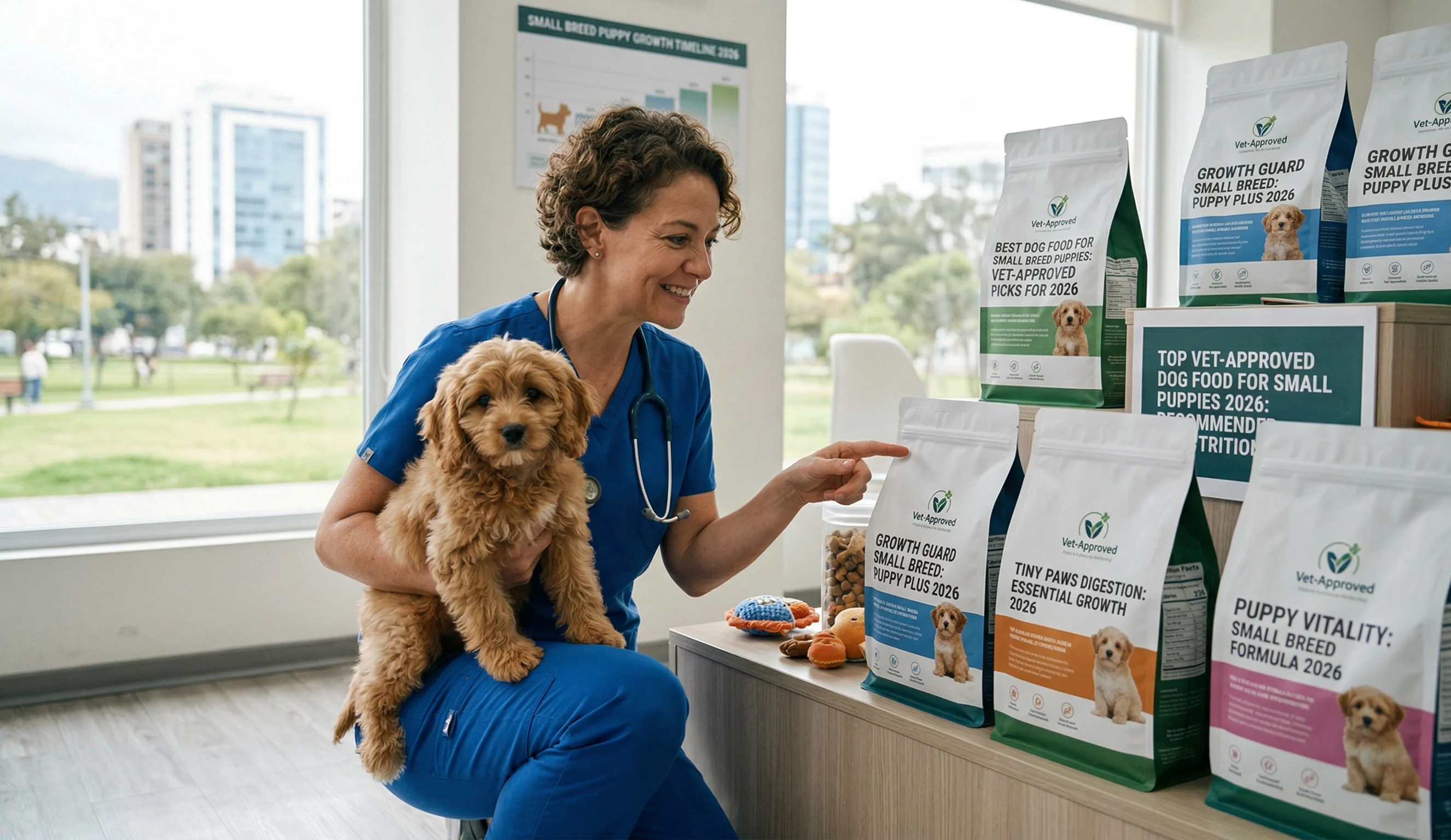
Best Dog Food for Small Breed Puppies: Vet-Approved Picks for 2026
Quick Summary
Our expert verdict at a glance
Royal Canin Small Puppy is the top pick for small breed puppy nutrition thanks to its precise kibble size, DHA-rich formula, and breed-stage-specific engineering.
Getting puppy nutrition right is the most important feeding decision you’ll make for your small dog. The best dog food for small breed puppies isn’t just a smaller version of adult food — it’s a specifically calibrated formula designed to support rapid brain development, bone growth, and the unique metabolic demands of puppies who’ll finish growing by 9–12 months.
Small breed puppies are especially vulnerable in their first year. Hypoglycemia (low blood sugar) is a real risk for toy breeds under 4 pounds, and the wrong calcium-to-phosphorus ratio can affect skeletal development. Here’s what you need to know.
What Small Breed Puppies Need Nutritionally
Small breed puppies have different needs from large breed puppies in almost every category:
DHA (Docosahexaenoic Acid): This omega-3 fatty acid is critical for brain and eye development in the first 6–8 weeks of life. Puppies synthesize DHA inefficiently, so they need it directly from food. Look for fish oil or fish meal as a DHA source — not just flaxseed, which provides ALA (a precursor to DHA, but converted less efficiently).
Calcium and Phosphorus Ratio: The ideal Ca:P ratio for puppies is 1.2:1 (calcium slightly higher than phosphorus). This ratio supports proper bone mineralization. Too much calcium causes abnormal bone development; too little leads to rickets. Puppy-specific formulas are pre-calibrated — avoid adding calcium supplements unless specifically directed by a vet.
Calorie Density: Small breed puppies need 55 calories per pound of body weight per day — roughly double what adult small breeds need. A 3-pound Chihuahua puppy needs about 165 calories daily, from a stomach that can only hold a few tablespoons of food at a time. High-calorie-density puppy food solves this challenge.
Protein: Minimum 22% (AAFCO puppy standard). Quality puppy foods run 28–32%, which supports rapid muscle and organ development.
How Long Should Small Breed Dogs Eat Puppy Food?
This is one of the most misunderstood aspects of small breed ownership. Small breeds reach adult size much faster than large breeds:
- Toy breeds (under 10 lbs): Fully grown by 9–10 months
- Small breeds (10–20 lbs): Fully grown by 10–12 months
- Medium-small breeds (20–30 lbs): Fully grown by 12–14 months
Feeding puppy food past 12–14 months to a small breed can cause weight gain because the calorie density is designed for rapid growth, not maintenance. Transition to adult food around 10–12 months for most small breeds.
🐾 Pro Tip: The transition from puppy to adult food should take the full 10 days, just like any food change. At 9 months, start mixing 25% adult food into the puppy food, gradually increasing over 10 days. Rushing this causes digestive upset and makes the switch harder.
Three-Times-a-Day Feeding for Small Breed Puppies
Adult small dogs do well on two meals per day. Puppies under 6 months need three. Small breed puppies have tiny stomachs that empty quickly, and their liver has limited glycogen storage — meaning they can’t go as long between meals without their blood sugar dropping.
A simple schedule:
- 7 AM: Morning meal (1/3 of daily calories)
- 12 PM: Midday meal (1/3 of daily calories)
- 6 PM: Evening meal (1/3 of daily calories)
After 6 months, transition to two meals (morning and evening). Always have fresh water available.
Top 4 Best Dog Foods for Small Breed Puppies
1. Royal Canin Small Puppy — Best Overall
Royal Canin Small Puppy is designed for dogs under 22 pounds from weaning to 10 months. The formula delivers 31% protein, 20% fat, and 371 kcal/cup — all appropriate for the small breed growth stage.
DHA is sourced from fish oil and is listed explicitly on the bag (270 mg per 100g as fed). The kibble is slightly smaller than the adult Mini formula, with a softer texture that’s easier for puppies just transitioning from their mother’s milk.
The formula also contains a prebiotic blend (FOS and MOS) to establish healthy gut bacteria during the critical early weeks. This matters — a healthy microbiome established in puppyhood tends to persist through adulthood.
2. Purina Pro Plan Puppy Small & Toy Breed — Best for Brain Development
Purina Pro Plan’s puppy formula for small and toy breeds includes DHA from fish oil specifically highlighted on the label. The formula is 30% protein, 20% fat, and meets AAFCO puppy nutritional levels through feeding trials (not just formulation).
The live probiotic blend (Lactobacillus acidophilus) is a genuine plus for digestive health in puppies, who are prone to loose stools during development. At $3.12/lb it’s mid-premium pricing with strong scientific backing.
3. Hill’s Science Diet Puppy Small Paws — Best Vet-Recommended Puppy Food
Hill’s Puppy Small Paws is the most commonly vet-recommended puppy food for small breeds. The formula uses chicken as the first ingredient, delivers 28% protein and 18% fat, and is AAFCO-verified through feeding trials.
DHA from fish oil is included, and the formula avoids artificial colors and preservatives. The kibble size is appropriate for small breed puppies (approximately 6mm) and the palatability is consistently high.
4. Blue Buffalo Life Protection Puppy Small Breed — Best Natural Puppy Option
Blue Buffalo’s puppy formula for small breeds uses deboned chicken as the first ingredient with no by-products, corn, wheat, or soy. The formula delivers 28% protein, 17% fat, and includes their LifeSource Bits with DHA, antioxidants, and vitamins.
The formula contains no artificial preservatives (using vitamin E and rosemary extract instead). At around $3/lb, it sits between Royal Canin and premium brands like Orijen, offering natural ingredients at a reasonable price.
Downside: Blue Buffalo has had historical recalls. Their recent record is cleaner, but it’s worth being aware. See our Blue Buffalo small breed review for full recall history.
When to Be Concerned: Hypoglycemia in Small Breed Puppies
Hypoglycemia (low blood sugar) is a genuine medical emergency in toy breed puppies under 4 months. Signs include:
- Weakness or lethargy
- Trembling or shaking
- Confusion or disorientation
- Seizures in severe cases
If you notice these signs, rub a small amount of honey or corn syrup on the puppy’s gums and get to a vet immediately. Prevent hypoglycemia by feeding on a strict schedule — never skip or delay meals for young puppies.
Small breed puppies who are stressed (new home, travel, illness) are especially vulnerable to hypoglycemia. During stressful transitions, increase feeding frequency temporarily to four small meals per day.
Transitioning Between Puppy Food Brands
If you’re switching puppy foods (whether because of a recall, a move, or changing needs), use this slower transition schedule for puppies — they’re more sensitive than adults:
- Days 1–3: 80% old, 20% new
- Days 4–7: 60% old, 40% new
- Days 8–10: 40% old, 60% new
- Days 11–14: 20% old, 80% new
- Day 15+: 100% new
For more on small breed puppy feeding and how nutrition differs from adult small breeds, see our best dog food for small breeds guide.
Frequently Asked Questions
Q: How much food should a small breed puppy eat per day?
A: Puppies need approximately 55 calories per pound of body weight daily, split into three meals. A 3-pound puppy needs about 165 calories; a 5-pound puppy needs about 275 calories. Check the kcal content per cup on your puppy food bag and calculate accordingly. Most small breed puppy formulas provide 350–420 kcal/cup, so amounts are small — often just 1–2 tablespoons per meal for toy breeds.
Q: When should I switch my small breed puppy to adult food?
A: For toy breeds (under 10 lbs at maturity), switch at 9–10 months. For small breeds (10–20 lbs), switch at 10–12 months. Watch for your puppy’s growth to plateau — this is the best natural signal that they’ve reached adult size and no longer need the extra calories of puppy food.
Q: Is it okay to feed small breed puppy food to an adult small dog?
A: Short-term it’s fine, but long-term feeding puppy food to an adult small dog causes weight gain. Puppy food is calorie-dense for rapid growth — once your dog is an adult, they need maintenance calories, not growth calories. If your adult dog gets into the puppy food occasionally, no harm done; just don’t make it a habit.
Q: Can small breed puppies eat wet food?
A: Yes, and wet food can actually help puppies who are transitioning from their mother’s milk, as the moisture content and texture are more similar. Some owners start with wet food and transition to dry, or use wet as a topper to encourage eating. Just ensure any wet food you use is labeled for puppies (or “all life stages”), not adult maintenance.
Q: Is grain-free food safe for small breed puppies?
A: Given the ongoing FDA investigation into grain-free diets and dilated cardiomyopathy, most veterinary nutritionists recommend grain-inclusive puppy foods as the default, especially during the critical development period. Save grain-free for confirmed grain allergies, which are rare in puppies.
Bottom Line
The best dog food for small breed puppies needs to deliver DHA for brain development, an appropriate Ca:P ratio for bones, and enough calorie density to fuel rapid growth without requiring huge portions. Royal Canin Small Puppy and Purina Pro Plan Puppy Small & Toy Breed are the top picks backed by both feeding trials and strong palatability records. Feed three times daily until 6 months, transition to adult food at 10–12 months, and always consult your vet if growth seems off track.
Tagged in:
Get Weekly Small Dog Food Tips
Curated reviews, exclusive deals from Chewy, and breed-specific nutrition advice — delivered every Tuesday. Join 12,000+ small dog parents.
🔒 No spam, ever. Unsubscribe anytime with one click.