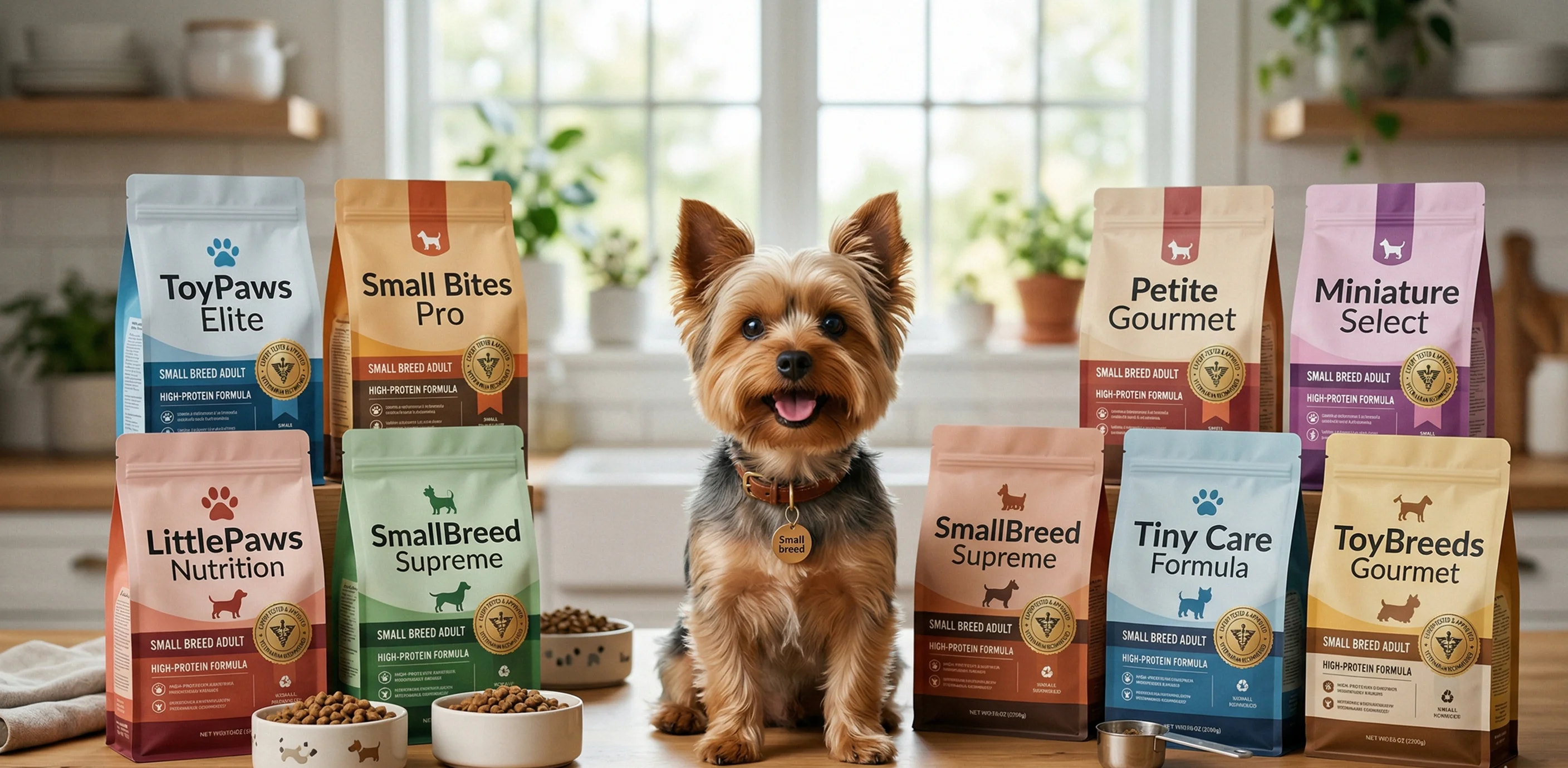
Best Dog Food for Small Breed Dogs: 8 Expert-Tested Options 2026
Quick Summary
Our expert verdict at a glance
Taste of the Wild Small Breed is the standout pick for owners who want grain-free with proven quality, while Canidae All Life Stages earns its place as the best family-friendly option for multi-dog households.
When we talk about the best dog food for small breed dogs, the conversation quickly splits into two camps: owners who want grain-free, high-meat formulas, and those who prefer vet-recommended grain-inclusive options. Both are valid — what matters most is ingredient quality, appropriate nutrition for size, and what actually works for your individual dog.
We tested eight small breed dog foods with a focus on ingredient transparency, real meat content, and the ongoing grain-free debate. Here’s what we found.
Why Ingredient Quality Matters More Than the Label
Marketing terms like “natural,” “holistic,” and “premium” mean almost nothing legally. The only things that actually matter on a dog food label are the ingredient list (in descending order by weight), the guaranteed analysis (protein, fat, moisture, fiber), and the AAFCO nutritional adequacy statement.
A food with “chicken” listed first might actually be mostly water — chicken fresh from the farm is about 70% moisture. Chicken meal (dehydrated) packs more protein per pound. Neither is inherently better; what matters is the total protein percentage in the guaranteed analysis and whether the protein comes from a named, quality source.
Red flags to watch for:
- “Meat and bone meal” (no species named)
- “Animal digest” (vague, low-quality flavoring)
- More than three grain or starch ingredients in the top five
- Artificial preservatives like BHA, BHT, or ethoxyquin
- Sweeteners like corn syrup or sugar
The Grain-Free vs. Grain-Inclusive Debate for Small Dogs
This is the most contentious topic in small breed nutrition right now. Here’s an honest breakdown.
The grain-free argument: Dogs are descended from wolves. Wolves don’t eat grains. Grain-free formulas tend to use peas, lentils, or sweet potatoes as carbohydrate sources instead of rice or corn. Some dogs with genuine grain sensitivities do better on these formulas.
The grain-inclusive counterargument: The FDA launched an investigation in 2018 into a possible link between grain-free diets (particularly those high in peas and legumes) and dilated cardiomyopathy (DCM) in dogs. While the investigation is ongoing and no definitive causal link has been established, many cardiologists now recommend grain-inclusive diets as the default — especially for breeds predisposed to heart issues.
Our take: Unless your dog has a confirmed grain allergy, a quality grain-inclusive food is the safer default choice. If you do choose grain-free, pick one that uses diverse protein sources and isn’t predominantly legume-based. See our grain-free dog food for small breeds guide for more detail on the FDA situation.
Top 8 Best Dog Foods for Small Breed Dogs
1. Taste of the Wild High Prairie Small Breed — Best Grain-Free with Novel Proteins
Taste of the Wild uses bison and venison as primary proteins — novel ingredients that most dogs haven’t been exposed to, making this ideal for dogs with common protein sensitivities (chicken, beef). Protein hits 32%, fat 18%, at 370 kcal/cup.
The formula uses sweet potatoes and peas for carbohydrates rather than corn or wheat. No artificial colors, flavors, or preservatives. At around $3.53/lb it’s mid-range pricing for what you get.
🐾 Pro Tip: Novel proteins like bison and venison are especially useful as the protein source in an elimination diet if you suspect your small dog has food allergies. Switching to a food they’ve never eaten before helps identify whether symptoms are food-related.
2. Canidae All Life Stages Small Breed
Canidae’s All Life Stages formula is genuinely unique — it’s formulated to work for puppies, adults, and seniors without reformulating. Chicken meal, turkey meal, and lamb meal lead the ingredient list, providing a diverse protein profile. Protein is 30%, fat 20%.
This is the go-to for households with dogs of different ages, or for owners who don’t want to switch foods as their dog ages. The small breed version has appropriately sized kibble pieces at 7mm.
3. Purina ONE Small & Toy Breed Adult — Best Budget Option with Real Chicken
Purina ONE isn’t as premium as Pro Plan, but it’s a solid step up from grocery-store brands. Real chicken is the first ingredient, followed by rice and corn gluten meal. Protein at 30%, fat at 17%.
At around $1.87/lb, this is one of the most accessible quality options for owners on a budget. It lacks some of the extras (no probiotics, limited omega-3), but it meets AAFCO standards and palatability is consistently high.
4. Nutro Ultra Small Breed Adult — Best Trio-Protein Blend
Nutro Ultra uses a trio of chicken, lamb, and salmon — providing a diverse amino acid profile that’s harder to achieve with a single-protein formula. The combination also adds natural omega-3 from salmon and a unique flavor most small dogs find highly palatable.
Protein is 27%, fat 16%, at 350 kcal/cup. The formula is non-GMO and contains no artificial colors, flavors, or preservatives. Good choice for dogs who’ve been on single-protein foods and need a change.
5. Instinct Original Small Breed — Best High-Meat Grain-Free
Instinct Original leads with cage-free chicken (70% animal ingredients), delivering 37% protein and 20% fat. This is a genuinely high-meat formula — not just labeled as such. At 473 kcal/cup, it’s calorie-dense, so smaller portions are needed.
Best for lean, active small breeds. Not ideal for dogs prone to weight gain.
6. Victor Select Nutra Pro Small Breed — Best Underrated Pick
Victor is a lesser-known brand that deserves more attention. Their small breed formula uses beef meal, chicken meal, and pork meal as primary proteins — delivering 30% protein and 20% fat at a very reasonable $1.75/lb. AAFCO compliant with a solid track record and minimal recalls.
7. Natural Balance L.I.D. Small Breed — Best for Simplified Ingredients
Natural Balance’s Limited Ingredient Diet Small Breed uses a single animal protein (salmon or lamb) with a single carbohydrate source (brown rice or sweet potato). This makes it easy to identify and eliminate potential allergens. Good choice for dogs with suspected food sensitivities who haven’t been formally tested yet.
8. Merrick Lil’ Plates Small Breed — Best Wet/Dry Combo
While Merrick Lil’ Plates comes in dry kibble, their wet food line pairs perfectly with it for a mixed-feeding approach. The dry formula uses deboned chicken or beef first, 30% protein, 17% fat. See our best dog food for small breeds complete guide for more on the wet/dry combination approach.
How to Compare Dog Food Labels Side by Side
When comparing two bags of small breed dog food, use this quick method:
- Convert to dry matter basis — subtract moisture percentage from 100, then divide each nutrient by that number to compare accurately across wet and dry foods
- Check the first three ingredients — at least two should be named protein sources
- Find the kcal/cup on the bag — compare calorie density, not just ingredient quality
- Verify the AAFCO statement — “formulated to meet” vs “feeding trial verified” (trials are more rigorous)
- Check recall history — the FDA’s pet food recall database is free and searchable at fda.gov
Frequently Asked Questions
Q: Is real meat better than meat meal in small breed dog food?
A: Both are legitimate protein sources. Fresh “real” meat contains around 70% water, meaning it drops significantly in weight after cooking. Meat meal is pre-dehydrated, so it delivers more concentrated protein per pound. The best foods often include both — fresh meat for palatability and amino acid profile, plus named meat meal for concentrated protein.
Q: What protein percentage should small breed dog food have?
A: A minimum of 22% crude protein (on a dry matter basis) is the AAFCO requirement. Quality small breed formulas typically range from 25–35%. Higher isn’t always better — very high protein (35%+) can stress kidneys in senior dogs. For healthy adults, 25–32% is the sweet spot.
Q: Is chicken a common allergen in small dogs?
A: Yes, chicken is one of the most common food allergens in dogs, simply because it’s also the most commonly fed protein. If your small dog shows signs of food allergy (itchy skin, ear infections, chronic loose stools), switching to a novel protein like bison, venison, duck, or kangaroo is a good first step. See our guide to dog food for small dogs with allergies for the elimination diet protocol.
Q: How do I know if my small dog’s food has enough fat?
A: Check the guaranteed analysis on the bag. Small breed adult dogs generally need 12–18% fat (dry matter basis). Signs of insufficient fat include a dull coat, dry flaky skin, and low energy. Signs of too much fat (over 20% for sedentary dogs) include weight gain and loose stools.
Q: Should small breed dogs eat food from a bag or fresh/raw food?
A: Commercial kibble is convenient, affordable, and nutritionally complete when you choose a quality brand. Fresh and raw diets can offer benefits (higher moisture, less processed ingredients) but require careful formulation to avoid deficiencies. If you’re interested in fresh food, services like The Farmer’s Dog or Nom Nom provide vet-formulated fresh meals sized for small dogs — though the cost is significantly higher than kibble.
Bottom Line
The best dog food for small breed dogs depends on whether you prioritize ingredient simplicity, novel proteins, or proven brand reliability. For grain-free, Taste of the Wild Small Breed delivers novel proteins at a fair price. For budget-conscious quality, Purina ONE Small & Toy Breed is tough to beat. Whatever your choice, real named meat in the first two ingredients and an AAFCO nutritional adequacy statement are the non-negotiables.
Tagged in:
Get Weekly Small Dog Food Tips
Curated reviews, exclusive deals from Chewy, and breed-specific nutrition advice — delivered every Tuesday. Join 12,000+ small dog parents.
🔒 No spam, ever. Unsubscribe anytime with one click.