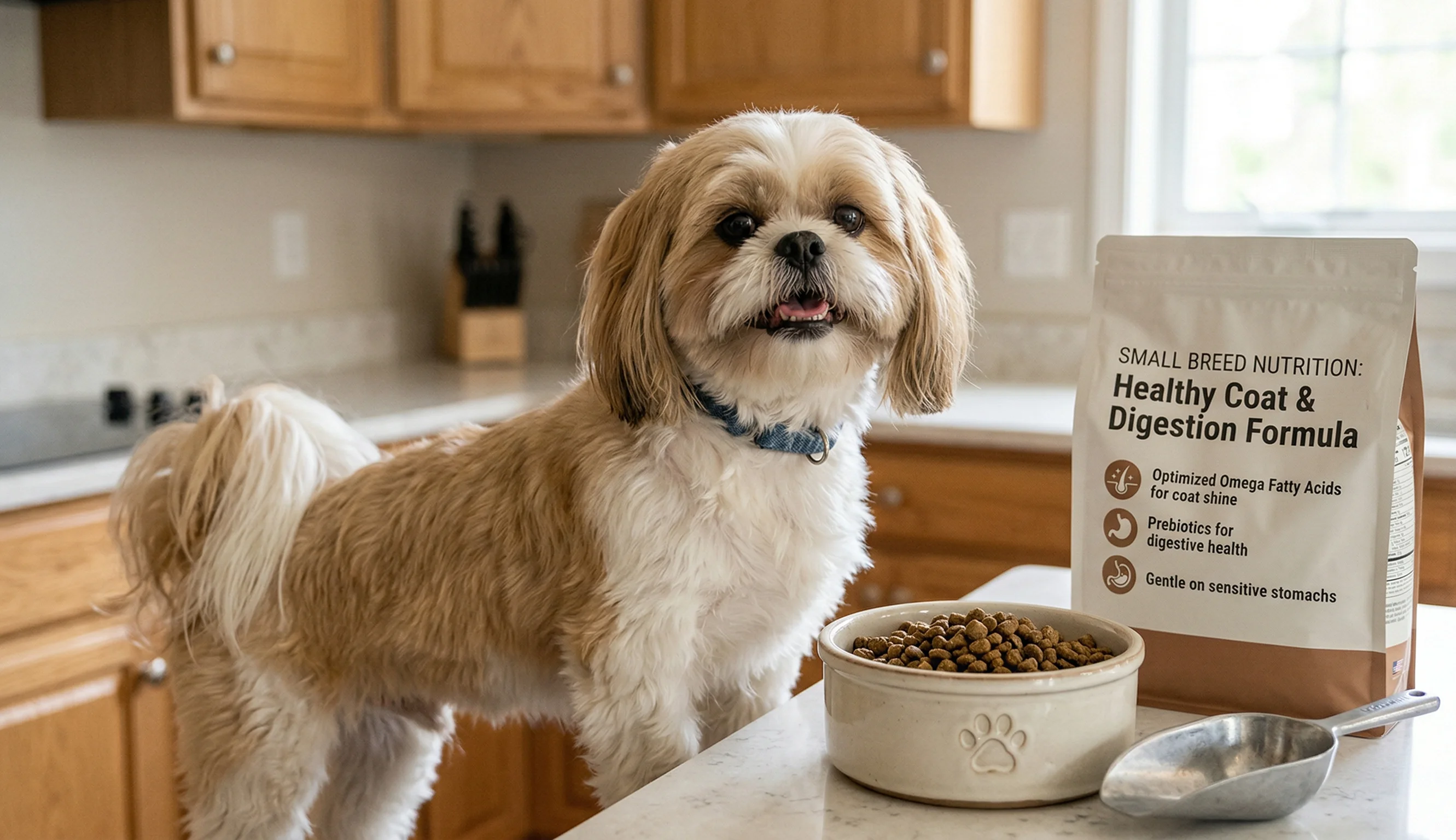
Best Dog Food for Shih Tzu: Top Picks for Healthy Coat & Digestion 2026
Quick Summary
Our expert verdict at a glance
Royal Canin Shih Tzu Adult earns top marks for this breed with its specifically shaped kibble designed for the flat face and a formula addressing coat and digestive health.
The Shih Tzu is one of the most beloved small breeds in America — and one of the most nutritionally specific. Between their flat face, their luxurious double coat, their tendency toward sensitive stomachs, and their genetic predisposition to skin issues, finding the best dog food for Shih Tzu requires addressing several needs simultaneously.
Understanding Shih Tzu Health Concerns That Affect Nutrition
Brachycephalic anatomy: The Shih Tzu’s flat face (brachycephalic muzzle) affects how they eat. Standard kibble is difficult for many Shih Tzus to pick up and chew because the flat jaw can’t generate the same bite mechanics as a longer-muzzled dog. Specially shaped, lower-profile kibble that can be grasped by the flat jaw makes eating more comfortable and reduces air swallowing during meals.
Air swallowing during eating is a genuine problem in brachycephalic dogs — it leads to gas, bloating, and discomfort. Kibble that allows a proper bite reduces this.
Sensitive skin and coat: Shih Tzus have a double coat — a soft undercoat and a silky topcoat — that requires consistent omega fatty acid support from diet. Dogs deficient in omega-3 and omega-6 show it quickly: dull coat, flaking skin, excessive shedding, and hot spots. The skin barrier function also depends on fatty acid intake, making dietary fat quality particularly important for this breed.
Sensitive stomach: Many Shih Tzus have sensitive digestive systems and react to high-fat diets, sudden food changes, or cheap filler ingredients with vomiting or loose stools. Digestibility of protein sources matters — highly digestible proteins from named sources (chicken, turkey, salmon) cause less GI irritation than low-grade by-products or generic meal.
Dental health: Like most small breeds, Shih Tzus are prone to dental disease. Their flat face often results in misaligned teeth (underbite is common), making dental disease an even greater concern. Crunchy kibble is essential — and regular professional cleanings are a non-negotiable part of Shih Tzu ownership.
🐾 Breed Tip: Shih Tzus are prone to tear staining — the reddish-brown discoloration around the eyes. While partly genetic and partly structural (their prominent eyes), diet can influence it. Foods with artificial dyes, high iron content from low-quality water, or specific proteins have been anecdotally linked to increased staining. Switching to a single-protein, limited-ingredient food and filtered water sometimes reduces staining. It’s not guaranteed, but it’s worth trying.
What to Look for in Shih Tzu Dog Food
Kibble shape for flat faces: Look for D-shaped, cushion-shaped, or lower-profile kibble rather than round spheres. Royal Canin Shih Tzu-specific kibble is heart-shaped with a specific height/width ratio designed for the Shih Tzu’s jaw.
Omega-3 and omega-6 ratio: The ideal omega-6 to omega-3 ratio for coat health is roughly 5:1 to 10:1. Look for fish oil (omega-3 DHA/EPA) and sunflower or safflower oil (omega-6 linoleic acid) on the ingredient list. Flaxseed provides omega-3 ALA, which is less efficiently converted — fish oil is superior.
Digestible proteins: Chicken meal, turkey meal, and fish meal from named species are the most digestible commercial protein sources. Avoid formulas where generic “meat meal” or “poultry by-product” appears in the top five ingredients.
Moderate fat (12–16%): High-fat diets (over 18%) frequently cause digestive upset in Shih Tzus. Moderate fat with quality sources (chicken fat, fish oil) supports coat health without overloading the digestive system.
Prebiotics/probiotics: Formulas with added Lactobacillus or FOS (fructooligosaccharides) support the sensitive Shih Tzu gut.
Top 4 Best Dog Foods for Shih Tzu
1. Royal Canin Shih Tzu Adult — Best Overall
Royal Canin Shih Tzu Adult is specifically designed for pure and mixed Shih Tzus over 10 months. The kibble is heart-shaped with a specific texture profile that encourages the flat-jawed Shih Tzu to bite down properly rather than scooping.
The formula delivers 25% protein, 15% fat, and 356 kcal/cup. Specific skin and coat support comes from EPA, DHA, and a precise omega-6 profile. The formula includes chelated minerals and biotin specifically chosen for coat quality.
Price: Around $3.50/lb — premium, but the breed-specific precision is genuine.
2. Hill’s Science Diet Small & Toy Breed Adult — Best Vet-Recommended
Hill’s Small & Toy Breed formula uses chicken as the first ingredient with 22.5% protein and 14.5% fat. The digestibility of this formula is among the highest for mainstream brands — verified by feeding trials rather than just formulation.
The moderate fat level (14.5%) is well-suited to the Shih Tzu’s sensitive digestive system. The formula includes natural fiber sources for digestive support and vitamin E for immune health.
3. Blue Buffalo Basics Small Breed Turkey & Potato — Best for Sensitive Stomachs
Blue Buffalo Basics is a limited ingredient formula with turkey meal as the single animal protein and potato as the primary carbohydrate — keeping the ingredient list simple and reducing potential triggers for sensitive Shih Tzu digestive systems.
The limited ingredient approach makes it easy to identify food reactions. At 24% protein, 13% fat, 339 kcal/cup, the nutrition is appropriate for adult Shih Tzus without being excessive. Pumpkin is included as a natural fiber source for digestive regularity.
4. Wellness CORE Small Breed Original — Best for Coat Focus
Wellness CORE Small Breed leads with deboned turkey and turkey meal, delivering 36% protein and 16% fat. The higher protein supports the extensive keratin production needed for the Shih Tzu’s long, silky coat. Salmon meal provides omega-3 DHA/EPA specifically for coat quality.
The grain-free formula uses peas and potatoes — keep the DCM consideration in mind. For Shih Tzus without cardiac concerns, this formula’s coat support is exceptional.
Feeding Guide for Shih Tzu Adults
Most adult Shih Tzus (9–16 lbs) need:
- 9 lbs: 1/3 to 1/2 cup per day (split into two meals)
- 12 lbs: 1/2 to 2/3 cup per day
- 16 lbs: 2/3 to 3/4 cup per day
Adjust based on calorie density of your specific food. Use a kitchen scale for accuracy — eyeballing small portions in measuring cups is imprecise.
For a complete overview of small breed feeding, see our best dog food for small breeds nutrition guide.
Frequently Asked Questions
Q: What is the best food for a Shih Tzu with a sensitive stomach?
A: Blue Buffalo Basics Small Breed (limited ingredient), Hill’s Science Diet Sensitive Stomach & Skin Small Breed, or Royal Canin Digestive Care Small are the top picks. Look for single-protein formulas, moderate fat (under 16%), and added probiotics or prebiotics. Transition to new foods slowly over 10 days.
Q: Does diet affect Shih Tzu tear staining?
A: Possibly, though the evidence is anecdotal. Some owners report improvement by switching to limited ingredient food, using filtered water, and eliminating artificial food colorings. The main causes of tear staining are structural (prominent eyes, narrow tear ducts) rather than dietary, but diet is worth addressing as a secondary factor.
Q: How much should I feed my Shih Tzu daily?
A: Most adult Shih Tzus (9–16 lbs) need 1/3 to 3/4 cup of quality kibble daily, split into two meals. Always reference the specific calorie density on your food’s label and adjust based on your dog’s body condition. Shih Tzus who get table scraps or frequent treats need correspondingly less food.
Q: Is grain-free food okay for Shih Tzus?
A: Unless your Shih Tzu has confirmed grain sensitivity, grain-inclusive food is the recommended default given current FDA research. If you do use grain-free, choose a formula where peas and legumes aren’t in the top three ingredients.
Q: What foods should Shih Tzus avoid?
A: Avoid food with artificial dyes (may worsen tear staining), high fat content over 18% (common digestive trigger), generic “meat meal” or “animal digest” in top ingredients, and large kibble designed for bigger breeds. Also avoid human foods including grapes, onions, garlic, chocolate, and xylitol.
Bottom Line
The best dog food for Shih Tzu dogs addresses three simultaneous needs: flat-face-friendly kibble design, coat-supporting omega fatty acids, and digestive gentleness. Royal Canin Shih Tzu Adult does all three with breed-specific precision. For owners who prefer natural ingredients, Wellness CORE Small Breed delivers exceptional coat support at a high-protein level. Hill’s Science Diet Small & Toy Breed is the safest vet-recommended option for Shih Tzus with ongoing digestive issues.
Tagged in:
Get Weekly Small Dog Food Tips
Curated reviews, exclusive deals from Chewy, and breed-specific nutrition advice — delivered every Tuesday. Join 12,000+ small dog parents.
🔒 No spam, ever. Unsubscribe anytime with one click.