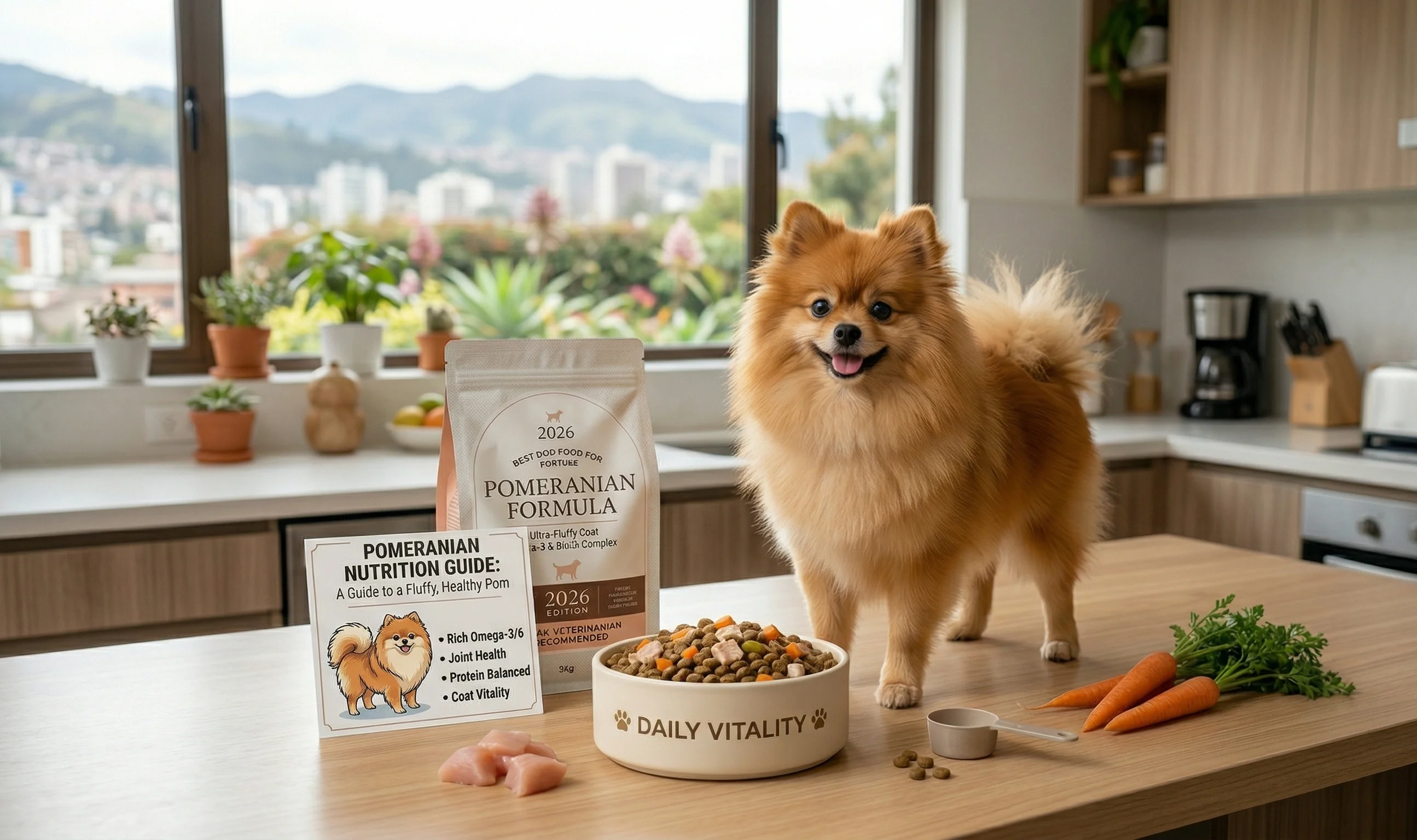
Best Dog Food for Pomeranians: Nutrition Guide for a Fluffy, Healthy Pom 2026
Quick Summary
Our expert verdict at a glance
Purina Pro Plan Small Breed Adult is the top pick for Pomeranians — it delivers high-quality protein for coat health and muscle maintenance while keeping fat levels appropriate for weight-prone Poms.
Pomeranians are dense little packages of personality — and under all that fluff, there’s a dog with some specific health vulnerabilities that directly impact what they should eat. Choosing the best dog food for Pomeranians means understanding the breed’s predisposition to certain conditions and feeding proactively to support long-term health.
Pomeranian Health Concerns That Affect Diet
Luxating patella: This is the most common orthopedic condition in Pomeranians. The kneecap slips out of the groove it’s supposed to sit in, causing intermittent lameness and, over time, joint deterioration. Maintaining a healthy weight is the single most impactful dietary strategy — every extra pound on a 5-pound dog represents 20% excess body weight, which puts enormous stress on already-compromised joints.
Tracheal collapse: Pomeranians are prone to a weakened trachea that collapses during breathing. While diet doesn’t directly cause tracheal collapse, obesity makes it significantly worse — excess weight compresses the airway and increases breathing effort. This is another strong argument for weight management in this breed.
Hypoglycemia: Like other toy breeds, Pomeranians under 4 pounds are vulnerable to blood sugar drops, especially as puppies. Regular, scheduled meals (3 times daily for small adults, 4 times for puppies under 6 months) prevent dangerous glucose dips.
Alopecia X (Black Skin Disease): This is a hormonal skin condition specific to Nordic breeds including Pomeranians that causes symmetrical hair loss and skin darkening. While primarily hormonal in origin, adequate dietary zinc and omega fatty acids support skin barrier function and may reduce severity. Look for formulas with zinc from chelated mineral sources.
Coat quality: The Pomeranian’s famous double coat — a thick undercoat with a profuse, fluffy outer coat — requires significant nutritional investment. Dietary fat provides the raw material for coat lipids, and omega-3/6 fatty acids directly influence coat texture, sheen, and density.
🐾 Breed Tip: Pomeranians are notorious for resource guarding — they’ll sometimes guard their food bowl aggressively despite being tiny. Avoid free-feeding (leaving food out all day) as it reinforces guarding behavior and makes it impossible to monitor intake. Scheduled meals in a calm, low-traffic area help reduce guarding anxiety.
The Pomeranian Weight Problem: Why It’s Harder Than It Looks
Pomeranians are among the breeds most likely to become overweight, despite their small frame. The reasons are multiple:
- Their abundant coat makes body condition difficult to assess visually — you can’t see weight gain under all that fur. Run your hands along their ribs monthly.
- They’re often carried rather than walked, reducing daily calorie burn.
- Owners see small amounts of food as “not enough” and overfeed.
- They’re excellent at begging and manipulating their humans into extra treats.
A healthy adult Pomeranian weighs 3–7 pounds. You should feel the ribs easily with slight pressure — visible ribs indicate underweight, ribs that require firm pressure to feel indicate overweight.
Calculate daily calories: For a 5-pound Pomeranian with moderate activity, target 200–230 calories daily. A 7-pound Pomeranian needs about 270–310 calories. Treats should never exceed 10% of daily calories — that’s 20–30 calories for a small Pom, roughly equal to 2–3 small training treats.
Key Nutritional Priorities for Pomeranians
Quality protein (minimum 25%): Supports lean muscle mass and coat keratin production. Real named meat sources — chicken, turkey, salmon — are preferred.
Omega-3 fatty acids (DHA/EPA from fish oil): The most important dietary factor for coat quality and joint inflammation reduction. Look for fish oil specifically listed, not just flaxseed.
Omega-6 fatty acids (linoleic acid from sunflower or safflower oil): Work with omega-3 to maintain skin barrier and coat sheen.
Glucosamine and chondroitin: Support joint health in a breed predisposed to luxating patella. Many small breed adult formulas include these — check the label for actual amounts (target 250–500mg glucosamine daily for a 5-pound dog).
Controlled fat (12–16%): High-fat diets cause weight gain in the sedentary Pomeranian. Avoid formulas over 18% fat unless your dog is very active.
L-carnitine: Helps convert fat to energy — particularly useful for weight management.
Top 4 Best Dog Foods for Pomeranians
1. Purina Pro Plan Small Breed Adult — Best Overall for Poms
Purina Pro Plan Small & Toy Breed hits the ideal nutritional profile for Pomeranians: 30% protein (real chicken first), 20% fat (slightly high but balanced by quality sources), EPA/DHA from fish oil, live probiotics, and a probiotic blend for digestive health.
The research backing behind Pro Plan is substantial, and the formula has been linked to improved skin and coat quality in multiple studies. At 404 kcal/cup, portion control is important for sedentary Poms.
2. Royal Canin Small Adult — Best for Precision Feeding
Royal Canin Small Adult is engineered for dogs under 22 pounds and includes L-carnitine for fat metabolism — a specific benefit for weight-prone Pomeranians. The 25% protein and 15% fat profile is moderate and appropriate, with EPA/DHA for coat support.
The kibble size (8mm crescent) is ideal for the Pomeranian’s small jaw. If your Pom has been gaining weight on higher-calorie formulas, the 358 kcal/cup here is more manageable.
3. Merrick Lil’ Plates Grain Free — Best for Picky Poms
Pomeranians are frequently picky eaters. Merrick Lil’ Plates rotation feeding across multiple protein varieties keeps mealtimes interesting without requiring formula switches. The higher aromatic qualities of Merrick’s kibble overcome the nose-in-the-air rejection that many Pom owners deal with.
30% protein, 17% fat, with deboned real meat always first. Available in chicken, beef, salmon, and duck varieties for easy rotation.
4. Hill’s Science Diet Small Paws Adult — Best for Weight Management
Hill’s Small Paws at 22.5% protein and 14.5% fat has the most moderate fat content among our top picks, making it the best choice for sedentary Pomeranians prone to weight gain. The lower calorie density (370 kcal/cup) is more forgiving of small measurement errors in portioning.
Vet-recommended and backed by feeding trials — a solid conservative choice for owners managing weight concerns.
Daily Feeding Guide for Pomeranians
For Royal Canin Small Adult (358 kcal/cup):
- 3-lb Pomeranian: 3–4 tablespoons per day
- 4-lb Pomeranian: 4–5 tablespoons per day
- 5-lb Pomeranian: 5–6 tablespoons per day
- 6-lb Pomeranian: 6–7 tablespoons per day
Split into two meals (or three for very small Poms). Measure with a tablespoon rather than eyeballing for accuracy.
For more complete small breed nutrition guidance, see our best dog food for small breeds guide.
Frequently Asked Questions
Q: How much should I feed my Pomeranian?
A: Most adult Pomeranians (3–7 lbs) need 180–300 calories daily depending on weight and activity level. This translates to roughly 3–7 tablespoons of kibble per day for most quality small breed formulas. Split into two meals. Adjust every month based on body condition — feel the ribs through the coat, don’t rely on visual assessment under all that fur.
Q: What is the best food for a Pomeranian’s coat?
A: Foods with high omega-3 fatty acids from fish oil (not just flaxseed) produce the most visible coat improvements. Purina Pro Plan Small Breed, Royal Canin Small Adult, and Wellness CORE Small Breed all include fish oil. Supplement with a teaspoon of wild-caught canned salmon or salmon oil if coat quality is a priority.
Q: Is grain-free food okay for Pomeranians?
A: Not recommended as a default. Given the FDA’s DCM research and the Pomeranian’s predisposition to heart issues (particularly in families with Pomeranians who’ve had cardiac problems), grain-inclusive is the safer choice unless confirmed grain sensitivity exists.
Q: What human foods can Pomeranians eat?
A: Safe options include plain cooked chicken, turkey, and beef; plain cooked eggs; blueberries; carrots; and green beans. All should be unseasoned (no salt, garlic, or onion). Avoid grapes, raisins, macadamia nuts, chocolate, avocado, onions, garlic, and anything containing xylitol.
Q: How do I help my overweight Pomeranian lose weight?
A: Switch to a weight management formula like Hill’s Perfect Weight Small & Mini. Measure food precisely (kitchen scale). Cut treats to 5% of daily calories. Increase daily walks by 10 minutes. Re-assess monthly. Avoid crash dieting — gradual weight loss of 1–2% of body weight per month is the safe target.
Bottom Line
The best dog food for Pomeranians balances coat-supporting omega fatty acids, weight management-appropriate fat levels, and joint health support — all while being palatable enough for a notoriously picky breed. Purina Pro Plan Small Breed Adult is the strongest all-around pick. For weight-conscious Pom owners, Hill’s Science Diet Small Paws provides a more moderate calorie profile. Whatever you choose, portion discipline and regular body condition checks are as important as the food itself for this breed.
Tagged in:
Get Weekly Small Dog Food Tips
Curated reviews, exclusive deals from Chewy, and breed-specific nutrition advice — delivered every Tuesday. Join 12,000+ small dog parents.
🔒 No spam, ever. Unsubscribe anytime with one click.