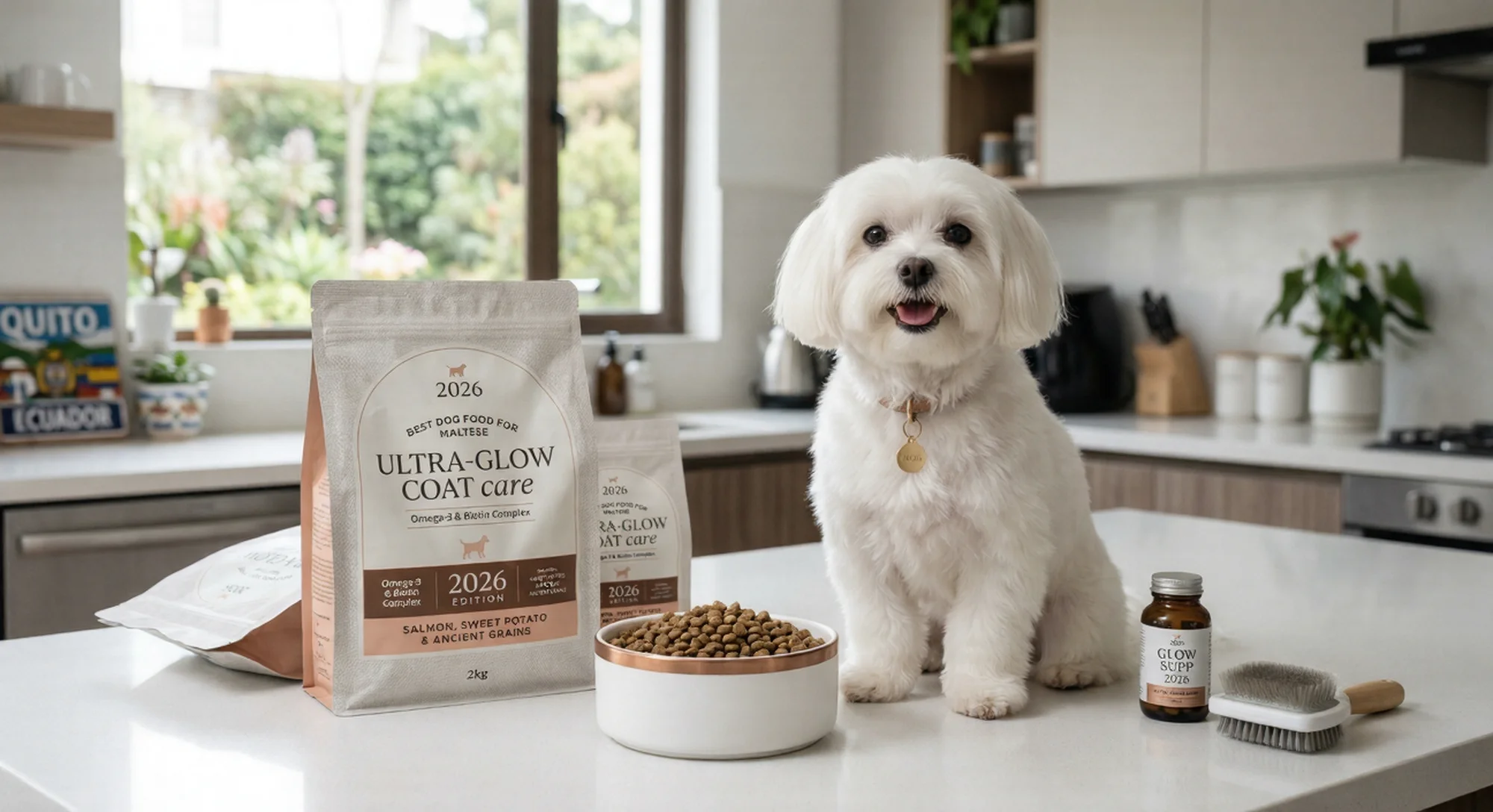
Best Dog Food for Maltese: Keeping Your White-Coated Dog Healthy 2026
Quick Summary
Our expert verdict at a glance
Royal Canin Mini Adult combined with filtered water is the most practical approach for Maltese owners addressing both tear staining and complete nutrition simultaneously.
The Maltese is one of the oldest toy breeds in existence, and their stunning white coat is their defining feature. But that coat — and the breed’s broader health profile — demands specific nutritional attention. Getting the best dog food for Maltese right means addressing tear staining, sensitive digestion, dental vulnerability, and the protein and fatty acid needs of a continuous hair-growing coat.
Maltese-Specific Health Concerns
Tear staining: The pinkish-brown discoloration around a Maltese’s eyes (epiphora staining) is caused by excessive tear production that stains the white coat with porphyrins — iron-containing compounds in tears. While the primary causes are structural (prominent eyes, narrow tear ducts), diet can be a contributing factor.
Specific dietary connections to tear staining include:
- Artificial food colorings (Red 40, Yellow 5, caramel color) — these don’t cause staining directly, but some Maltese owners report improvement after eliminating artificial dyes
- High iron content from low-quality water — if your tap water has high iron, switch to filtered water (this is often more impactful than any food change)
- Specific protein triggers — some owners report improvement switching away from chicken to turkey or fish
The honest truth: dietary interventions for tear staining have mixed results. For Maltese with severe structural issues (inverted eyelids, very narrow ducts), food alone won’t solve the problem. But a clean-ingredient, no-artificial-dye food is a reasonable first step.
Sensitive digestion: Many Maltese have genuine GI sensitivity — they react to high-fat foods, rich treats, and abrupt food changes with vomiting, loose stools, or both. This isn’t just pickiness — it’s a consistent breed characteristic that affects food selection.
Dental disease: The Maltese’s small jaw houses 42 adult teeth in a very crowded space. Professional dental cleanings every 1–2 years are standard practice for this breed. Crunchy dry kibble daily is non-negotiable — it’s not a luxury, it’s preventive dental care.
Hypoglycemia risk: Adult Maltese typically weigh 4–7 pounds. At the lower end of that range, blood sugar management requires regular scheduled meals (2–3 times daily).
🐾 Breed Tip: Many Maltese owners try over-the-counter “tear stain remover” supplements. Ingredients like tylosin (an antibiotic) were commonly used in these products but are now banned in some states and not recommended for routine use. Focus on diet quality, filtered water, and gentle daily eye cleaning with a damp cloth rather than antibiotic supplements.
What to Look For in Maltese Dog Food
No artificial dyes or colorings: Given the tear staining concern, choose foods with no artificial colors. Most premium small breed foods already avoid these, but double-check labels on any food you consider.
Moderate fat (12–16%): Keeps the sensitive Maltese digestive system happy without triggering loose stools.
Omega-3 from fish oil (not just flaxseed): For the silky Maltese coat, EPA/DHA from fish oil is more effective than ALA from plant sources.
Small kibble (6–8mm): The Maltese’s small jaw needs appropriately sized pieces for comfortable chewing and dental benefit.
Clean, named protein sources: Helps identify potential triggers if digestive or skin issues develop.
No artificial preservatives: BHA, BHT, and ethoxyquin are worth avoiding in a breed that may have sensitivities.
Top 4 Best Dog Foods for Maltese
1. Royal Canin Mini Adult — Best Overall for Maltese
Royal Canin Mini Adult is designed for dogs 9–22 pounds, and while it’s not Maltese-specific (Royal Canin doesn’t make a Maltese breed formula), the Mini Adult’s precisely sized crescent kibble at 8mm is ideal for the Maltese jaw. The formula delivers 25% protein, 15% fat, and 358 kcal/cup.
The formula contains no artificial colors or flavors, includes EPA/DHA from fish oil, and the chelated minerals support coat health from the inside. Palatability is consistently high, which matters for breed that can be picky.
2. Purina Pro Plan Small & Toy Breed Adult — Best for Coat Quality
Purina Pro Plan’s Small & Toy formula leads with real chicken at 30% protein — the highest protein level in our picks — providing maximum support for the Maltese’s continuous coat growth. The fish oil-sourced omega-3 fatty acids directly benefit the coat’s silky texture.
At 404 kcal/cup, the calorie density is slightly higher — important for portion discipline with a Maltese predisposed to weight gain when activity is low.
3. Blue Buffalo Life Protection Small Breed — Best for Tear Stain-Conscious Owners
Blue Buffalo explicitly avoids artificial colors, flavors, and preservatives — making it a logical choice for Maltese owners trying to reduce potential dietary contributors to tear staining. The formula uses deboned chicken (no by-products), and the LifeSource Bits add concentrated vitamins and antioxidants without artificial dye carriers.
26% protein, 15% fat, no synthetic dyes. If you’re going to try dietary intervention for tear staining, starting with a no-artificial-dye formula like this one makes sense.
4. Hill’s Science Diet Toy Breed Adult — Best Vet-Recommended for Sensitive Maltese
Hill’s Toy Breed formula is specifically calibrated for dogs under 15 pounds with high-quality chicken protein, moderate fat (12.5%), and digestibility backed by feeding trials. The lower fat profile is particularly suitable for Maltese with documented digestive sensitivity.
The formula includes vitamin E as a natural antioxidant and omega-6 fatty acids for skin barrier support. At 308 kcal/cup — one of the lowest on the list — it’s easy to feed appropriate portions without accidentally overfeeding a tiny Maltese.
Wet Food for Maltese: When to Use It
Wet food for Maltese serves several purposes:
- Palatability booster: Add 1–2 teaspoons of wet food to dry kibble for finicky eaters
- Senior Maltese: Older dogs with dental disease or tooth loss may need wet food as their primary diet
- Hydration support: Higher moisture content in wet food benefits dogs with kidney concerns
Choose wet food without artificial colors or dyes (same principle as dry food for tear staining). Hill’s Science Diet Savory Stew Small Breed and Royal Canin wet pouches for small dogs are well-formulated options.
See our best wet dog food for small dogs guide for specific wet food recommendations for Maltese.
Filtering Water for Maltese
This isn’t a food choice, but it may matter as much as any food selection for tear staining. If your tap water has high iron or mineral content, switching to a filtered pitcher (Brita, ZeroWater) or bottled spring water can meaningfully reduce porphyrin staining.
Hard water with high iron content contributes oxidized porphyrins to your dog’s system. This is more significant for white-coated breeds because staining is visible. It costs almost nothing to try.
Frequently Asked Questions
Q: Does food affect Maltese tear staining?
A: Diet can be a contributing factor, but it’s not the primary cause. The structural anatomy of the Maltese (prominent eyes, narrow tear ducts) is responsible for most tear staining. Dietary interventions — eliminating artificial dyes, switching proteins, using filtered water — may reduce staining in some dogs. Results vary and are not guaranteed.
Q: What is the best food for a Maltese with a sensitive stomach?
A: Hill’s Science Diet Sensitive Stomach & Skin Small Breed, Royal Canin Digestive Care Small, or Natural Balance LID Small Breed are top picks. Feed moderate fat (under 15%), transition slowly (10 days minimum), and avoid rich treats or table scraps entirely.
Q: How much should I feed my Maltese daily?
A: Most adult Maltese (4–7 lbs) need 175–280 calories per day. For Royal Canin Mini Adult (358 kcal/cup): a 5-pound Maltese needs about 4–5 tablespoons daily. For Hill’s Toy Breed (308 kcal/cup): about 5–6 tablespoons daily. Split into two meals. Use a kitchen scale for precision.
Q: Can grain-free food help with Maltese tear staining?
A: Not specifically. There’s no evidence that grain removal reduces tear staining. If you’re investigating diet for tear staining, focus on eliminating artificial dyes and common protein allergens (chicken → turkey or fish) rather than grain removal. Grain-free carries its own considerations (see our grain-free guide).
Q: What should Maltese dogs not eat?
A: Avoid grapes, raisins, onions, garlic, chocolate, macadamia nuts, avocado, and anything with xylitol. Also avoid high-fat human foods and fatty table scraps — Maltese are very sensitive to dietary fat and pancreatitis risk. Artificial food dyes are worth avoiding for the tear staining consideration.
Bottom Line
The best dog food for Maltese addresses the breed’s distinct priorities: a clean ingredient list without artificial dyes (for tear staining management), moderate fat content (for sensitive digestion), high-quality omega-3 from fish oil (for the silky coat), and appropriately small kibble (for dental health in a tiny jaw). Royal Canin Mini Adult covers all these bases for most Maltese owners. Combine it with filtered water and regular professional dental cleanings, and you’ve done the dietary work this breed needs.
Tagged in:
Get Weekly Small Dog Food Tips
Curated reviews, exclusive deals from Chewy, and breed-specific nutrition advice — delivered every Tuesday. Join 12,000+ small dog parents.
🔒 No spam, ever. Unsubscribe anytime with one click.